 Tap AAC
Core word “good”: how things are, and how it feels
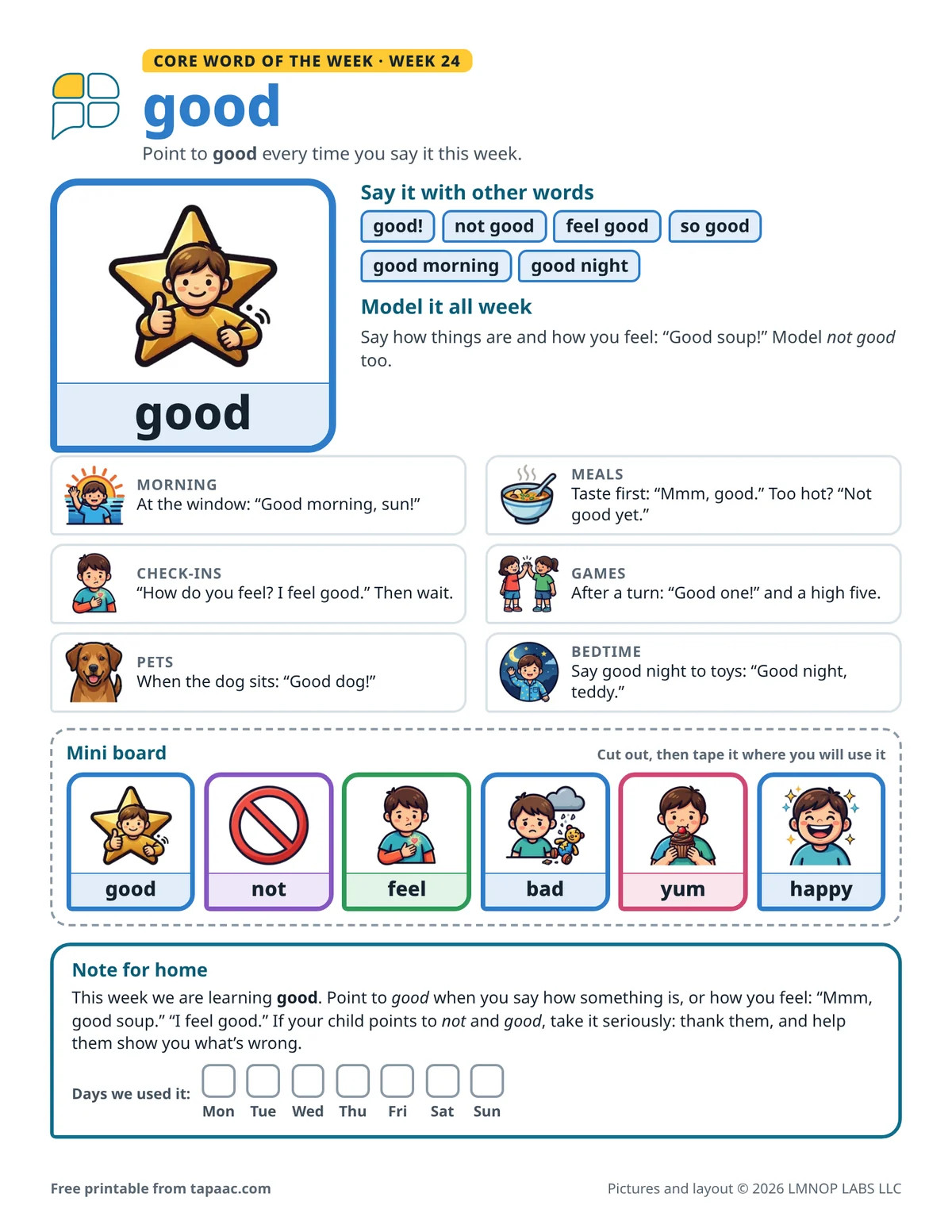
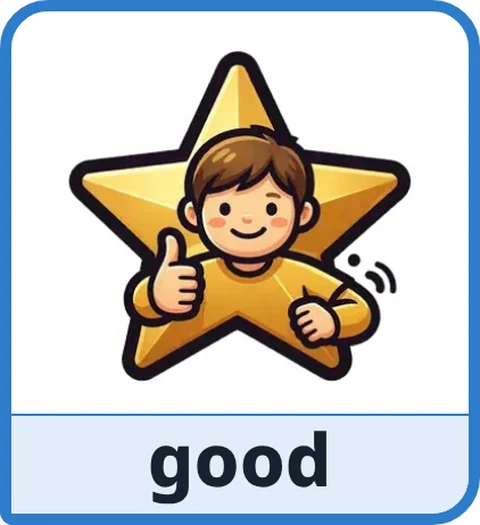
Good says how something is, or how a person feels: good soup, I feel good, not good. With week 8’s not, it lets a person tell you when something is wrong, as well as when it is fine. This week, point to good when you say how things are, and check in with the person about their day.
Download the free printable (PDF) US Letter, 1 page, 435 KB
Printing on A4 paper? Download the A4 PDF (1 page, 435 KB).
Have Tap AAC? Add to Tap AAC (.obz file, 214 KB) · How to add a board
- Week 24 of 32
- Free
- One page
Good or like? What’s different
Good is not the same as week 9’s like. Like is about what a person enjoys; good says how something is right now: the soup, the day, the way they feel. With not, it gives a simple way to say “something’s wrong” before anyone has to guess.
It closes weeks 17 to 24 because it pulls many of the others together: good morning, good night, feel good, not good, good one! Use it to comment, not only to praise: “Good soup” tells the person more than another “good job”.
Good mornings, tasting, check-ins and high fives
Morning and bedtime
- Open the curtains together: “Good morning! Good morning, sun!”
- Say good night to toys, people and the room: “Good night, teddy. Good night, toy box.”
Meals
- Taste first, then say it: “Mmm, good soup.” If it is too hot: “Not good yet. Let’s wait.”
- Smell things while you cook: “That smells good!”
Checking in
- After school or work, offer an easy question: “How was your day? Good? Not good?” Point to both and wait.
- Say how you feel, too: “I feel good today.” “I’m tired. Not good.”
- When the person seems upset, give them the words: “Not good? Something’s wrong. Show me.”
Games and play
- After any turn in a game: “Good one!” and a high five.
- A thumbs-up, thumbs-down game with snacks or pictures: “Good, or not good?”
Pets and books
- When the dog sits or the cat purrs: “Good dog!” “Good cat.”
- Talk about the characters in stories: “Is the wolf good? Not good!”
At school or therapy
- At the end of a session, look back together: “Painting was good. The noisy room was not good.”
After school, Sofia, who is 13, drops her bag by the door. Her dad points to good and not on her board: “How was school? Good? Not good?” Sofia looks away. He waits and says nothing more. After a while she taps not and good. “Not good. Thanks for telling me.” He sits down beside her: “Too loud? Too tired? Something with friends?” Sofia points to tired on her feelings page. “Tired. Let’s have a quiet snack.” The next afternoon, she taps good as soon as she walks in.
Not good, feel good, good night
Not good is the phrase to watch for: it can be the first sign that something is wrong.
- good!
- not good
- feel good
- so good
- good morning
- good night
If the answer is always good, or not good comes with no clue
If they always say good
Some people learn that “good” is the answer adults want. Model both sides yourself, honestly: “My day was not good. I spilled my coffee.” Then the person sees that “not good” is allowed.
If not good comes with no clue why
Thank them for telling you, then help them narrow it down: offer a few choices like tired, hungry, hurt or sad, with pictures, or use the feelings board. Take it seriously every time.
Note for home: when they say not good, take it seriously
This week we are learning good. Point to good when you say how something is, or how you feel: “Mmm, good soup.” “I feel good.” If your child points to not and good, take it seriously: thank them, and help them show you what’s wrong.
The same note is printed at the bottom of the week’s page, with a box to tick for each day. For families who are new to modeling, send the one-page AAC modeling at home handout with it, and keep using the word cards from earlier weeks.
More core word of the week plans
-
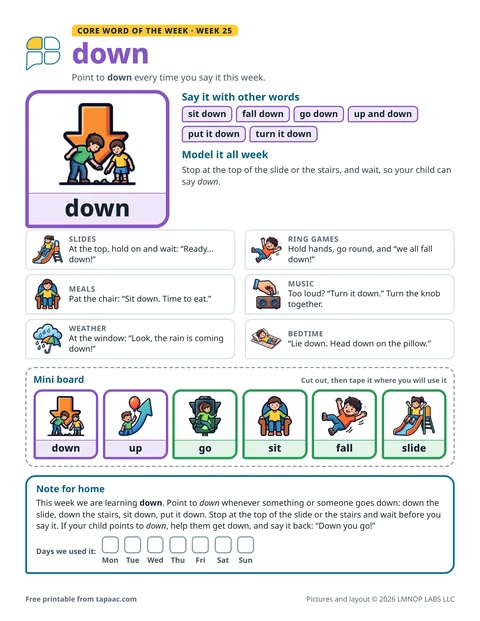 Week 25: downSlides, stairs and “we all fall down”: the partner of up.
-
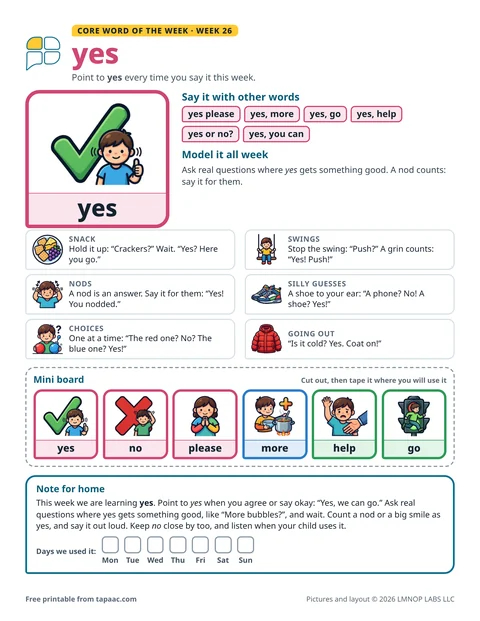 Week 26: yesAgree, accept and answer: yes please, yes more.
-
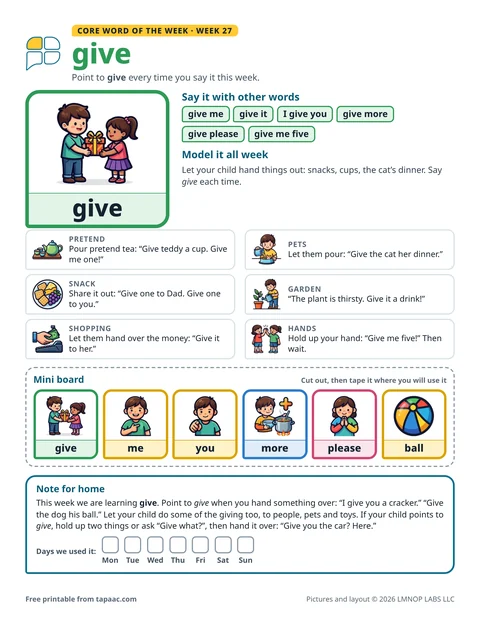 Week 27: givePass it on: give me, give you, give me five!
-
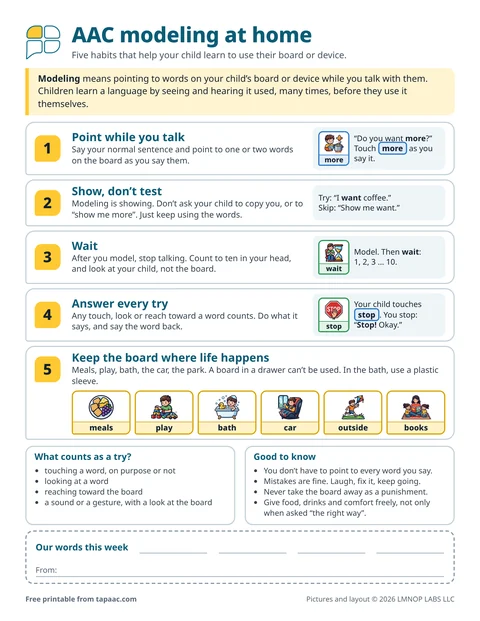 AAC modeling at homeFive habits on one page, to send home or stick on the fridge.
All core word printables and guides
Need a different board? Make your own with the free AAC board maker.
These cards, handouts and plans are general information, not therapy or medical advice, and they don’t replace a speech therapist. A speech therapist who knows the person can help choose the right words and the right way to practice. Everything here is free to print and share; please don’t sell it (terms of use). Questions? Email support@lmnoplabs.fun.