 Tap AAC
Core word “down”: the partner of up
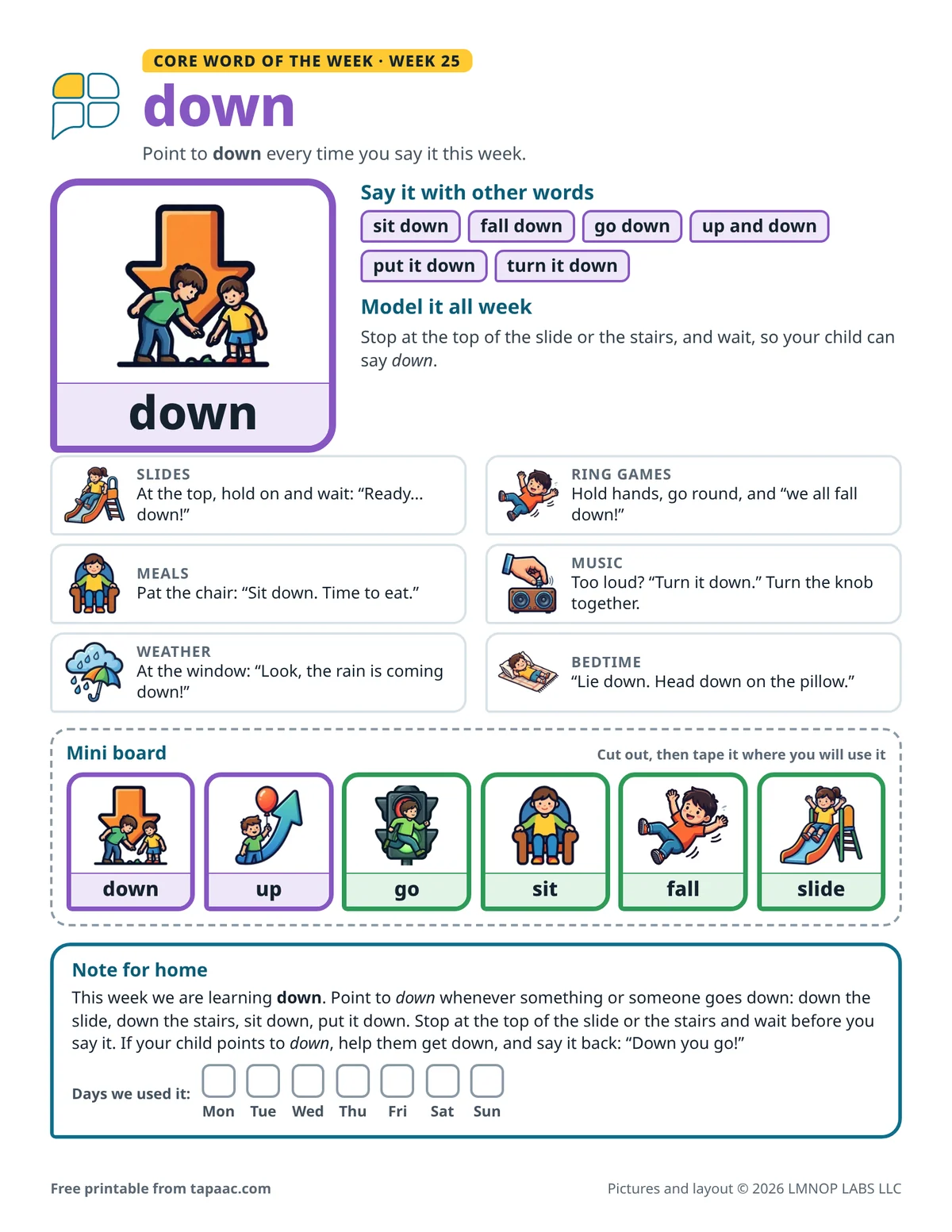
Down says which way: down the slide, sit down, put it down, fall down. It is the partner of up, and it comes with lots of movement and fun. This week, point to down whenever something or someone goes down, and pause just before the drop so the person can be the one to say it.
Download the free printable (PDF) US Letter, 1 page, 401 KB
Printing on A4 paper? Download the A4 PDF (1 page, 401 KB).
Have Tap AAC? Add to Tap AAC (.obz file, 197 KB) · How to add a board
- Week 25 of 32
- Free
- One page
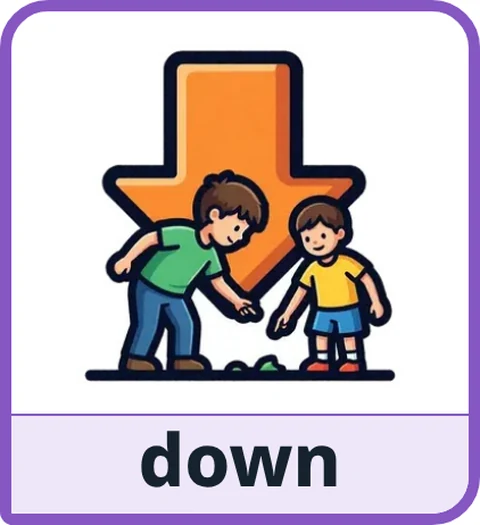
Why down completes the pair with up
Week 13’s up came first, because asking to be lifted or carried is so common. Down completes the pair, and the two together let a person run a whole game: up the steps, down the slide, up again. A word for the way back is as useful as a word for the way there.
Down also finishes phrases the person has seen already: go down, get down (week 22), put it down (week 20), sit down. And it isn’t only for play. “Turn it down” is how a teenager asks for quieter music.
Slides, ring games and falling leaves: everything coming down
Playground
- At the top of the slide, hold on for a moment and wait: “Ready... down!” Let the person start the ride.
- On a seesaw or a swing: “Up... and down. Up... and down.” Stop at the top and wait for the next “down”.
Games and songs
- Ring games where everyone falls at the end: “...we all fall down!” Flop over with a big bump, then wait before the next round.
- Throw a scarf or a feather up high and watch it float down: “Down, down, down... on your head!”
Meals and home
- At the table, pat the chair: “Sit down, please.” Sit down yourself at the same moment.
- Clearing up: “Cup down. Plate down.” Let the person put each thing down on the counter.
Stairs and elevators
- Going downstairs one step at a time: “Down, down, down.” Stop on the last step and wait before you jump off together.
- In an elevator, let the person press the button: “Going down!”
Music and screens
- When the music or the TV is too loud: “Too loud. Turn it down.” Turn the knob or press the button together.
Outside
- Watch the rain, snow or falling leaves from the window or the porch: “Look, it’s coming down!”
- Roll down a grassy slope, or send a ball rolling down it, and race it to the bottom.
Bedtime
- “Lie down. Head down on the pillow.” Then turn the lights down low.
In the living room, Mateo, who is 4, holds hands with his grandma and his big sister. They walk in a circle, singing, and on “we all fall down!” Grandma points to down on the card taped to the sofa and they all flop onto the rug. Mateo shrieks with laughter. In the third round, they stop just before the last line, and Grandma waits, eyebrows up. Mateo looks at the card and slaps it. “Down! We all fall down!” Everyone drops, and Mateo grabs their hands to go again.
Sit down, put it down, turn it down
Not every down is a direction: turn it down is a handy way to say the music is too loud.
- sit down
- fall down
- go down
- up and down
- put it down
- turn it down
If down means “put me down”, or you can’t tell what should go down
If down means “put me down” and you can’t yet
Answer the word, even if it has to wait: “Down? Yes, down at the bottom of the stairs.” Then put the person down as soon as you can, and say it again as their feet touch the ground.
If they say down and you can’t tell what should go down
Look at what is above them or in their hands, and guess out loud: “Down... off the chair? Turn the music down?” A point or a look at the thing finishes the message.
Note for home: stop at the top, and wait before you say it
This week we are learning down. Point to down whenever something or someone goes down: down the slide, down the stairs, sit down, put it down. Stop at the top of the slide or the stairs and wait before you say it. If your child points to down, help them get down, and say it back: “Down you go!”
The same note is printed at the bottom of the week’s page, with a box to tick for each day. For families who are new to modeling, send the one-page AAC modeling at home handout with it, and keep using the word cards from earlier weeks.
More core word of the week plans
-
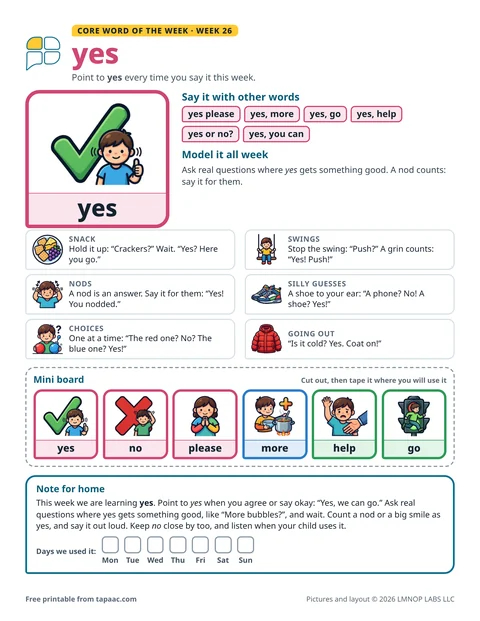 Week 26: yesAgree, accept and answer: yes please, yes more.
-
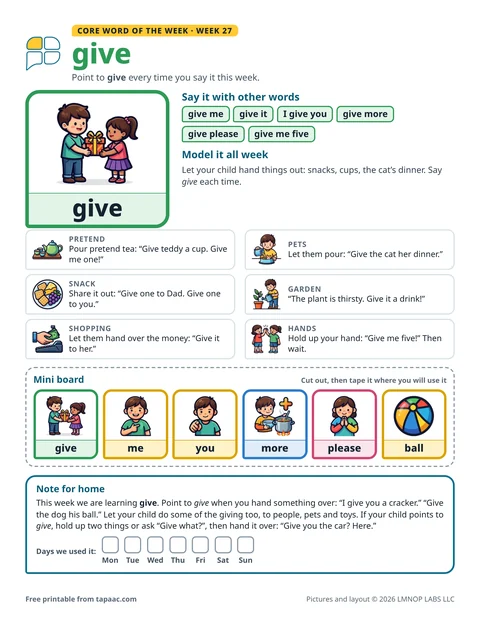 Week 27: givePass it on: give me, give you, give me five!
-
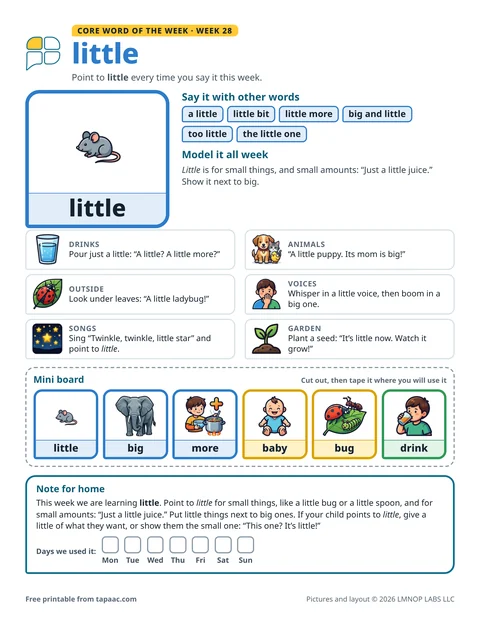 Week 28: littleSmall things and small amounts: a little bit more.
-
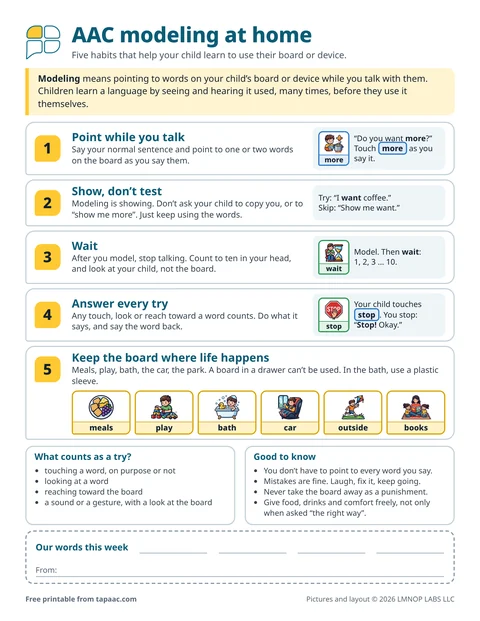 AAC modeling at homeFive habits on one page, to send home or stick on the fridge.
All core word printables and guides
Need a different board? Make your own with the free AAC board maker.
These cards, handouts and plans are general information, not therapy or medical advice, and they don’t replace a speech therapist. A speech therapist who knows the person can help choose the right words and the right way to practice. Everything here is free to print and share; please don’t sell it (terms of use). Questions? Email support@lmnoplabs.fun.