 Tap AAC
Core word “stop”: a word that gets listened to
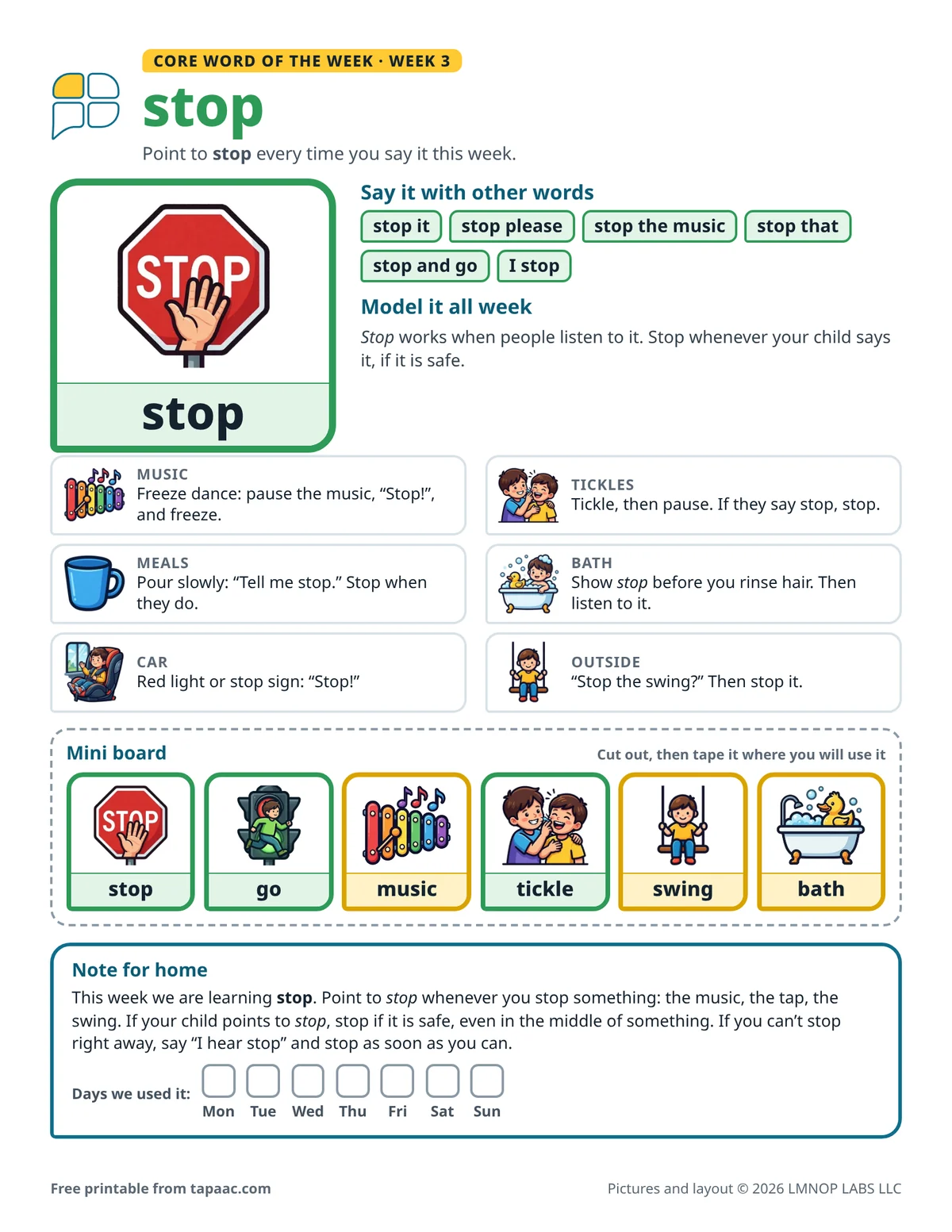
Stop lets a person end something they don’t like, or freeze a game for fun. It may be the most powerful word on the board, because it works the moment people listen to it. This week, point to stop whenever you stop something, and stop whenever the person says it, if it’s safe.
Download the free printable (PDF) US Letter, 1 page, 435 KB
Printing on A4 paper? Download the A4 PDF (1 page, 435 KB).
Have Tap AAC? Add to Tap AAC (.obz file, 214 KB) · How to add a board
- Week 3 of 32
- Free
- One page
Why stop gives the person control
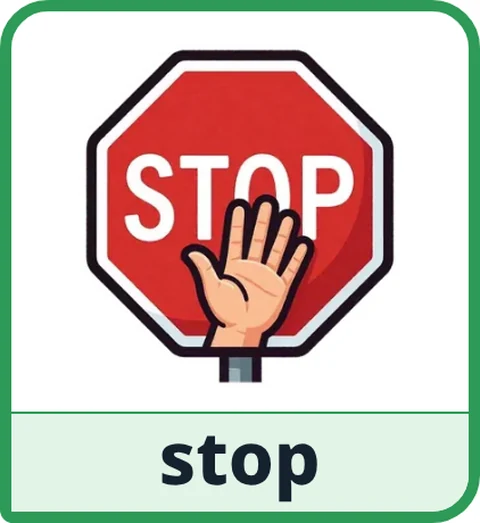
Stop gives the person control. With it, they can say “I don’t like this” clearly, instead of only pulling away or crying out, and see that the people around them listen.
It is also great fun in games, as the partner of last week’s go: go, stop, go, stop. Use it in games and in real moments, so the word means both.
Saying stop in freeze dance, at the tap and at red lights
In play
- Freeze dance: play music, pause it and point to stop: “Stop!” Everyone freezes.
- Tickles: tickle, then pause and model “Stop?” If the person says stop, stop at once, and ask again later.
- Roll a car toward a block tower: “Stop!” just before it crashes. Or let it crash: “Uh oh!”
At meals
- Pour juice slowly: “Tell me stop.” Point to stop when the cup is full.
- Serving food: “More? Stop? That’s enough.”
In the bath
- Before you rinse hair, show the person stop: “If you want me to stop, show me stop.” Then listen to it.
- Turn the tap on, then off: “Stop, water.”
In the car and outside
- Red lights and stop signs: “Stop. Red light.”
- At the curb on a walk: “Stop. Look.”
- Pushing the swing: “Stop the swing?” Then stop it.
Every day
- Model stop for yourself: “Stop the music, it’s too loud.”
- When a game between children gets too rough, model it for them: “Stop, please.”
Bath time. Grandma fills a cup to rinse Noah’s hair. She points to stop on the board taped to the wall: “If you want me to stop, show me stop.” She starts to pour, slowly. Noah reaches for the board and slaps stop. She stops at once. “Stop. Okay, I stopped.” She waits a moment, then asks, “Ready again?”, and this time Noah lets her finish.
Stop it, stop the music, stop and go
Stop works alone, but a second word says what should stop, or who is stopping.
- stop it
- stop please
- stop the music
- stop that
- stop and go
- I stop
If stopping isn’t safe, or stop turns into a game
If it isn’t safe to stop
Say you heard it, and stop as soon as you can: “I hear stop. We can’t stop in the road. We stop at the corner.” Then stop at the corner.
If stop becomes a game
That’s fine. It means they know the word works. Keep stopping in play, and keep modeling it in real moments too.
Note for home: when they say stop, stop if it’s safe
This week we are learning stop. Point to stop whenever you stop something: the music, the tap, the swing. If your child points to stop, stop if it is safe, even in the middle of something. If you can’t stop right away, say “I hear stop” and stop as soon as you can.
The same note is printed at the bottom of the week’s page, with a box to tick for each day. For families who are new to modeling, send the one-page AAC modeling at home handout with it, and keep using the word cards from earlier weeks.
More core word of the week plans
-
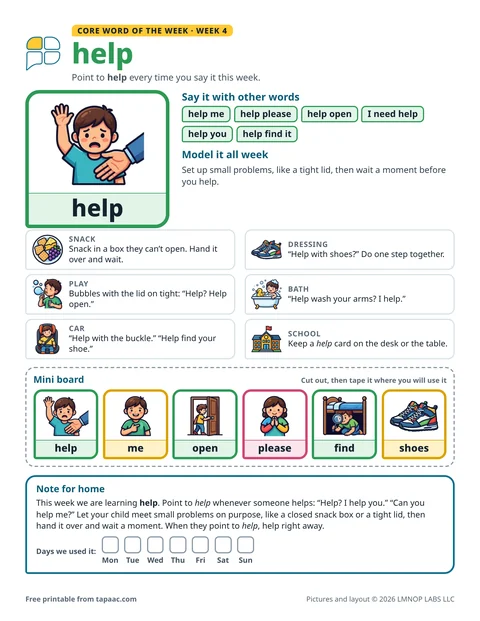 Week 4: helpAsk for help with lids, shoes, toys and hard work.
-
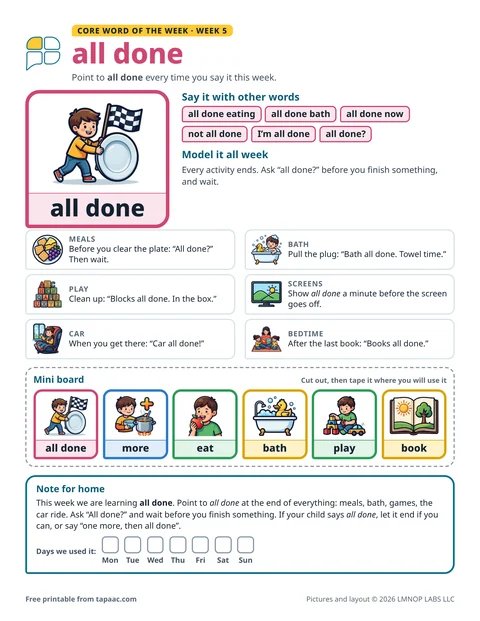 Week 5: all doneA calm way to end meals, baths, games and screen time.
-
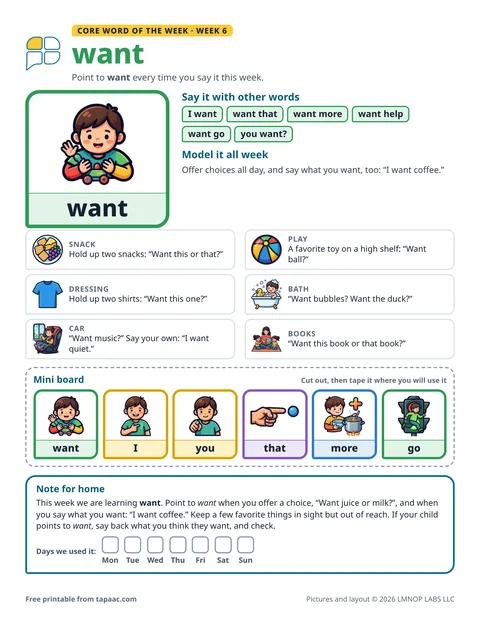 Week 6: wantChoices all day: want this or that? I want...
-
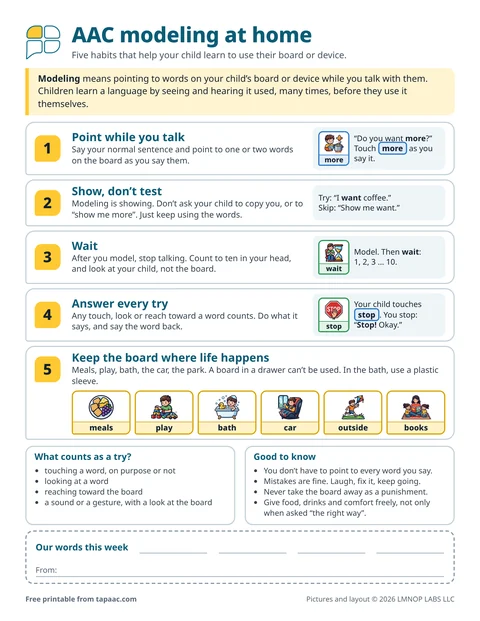 AAC modeling at homeFive habits on one page, to send home or stick on the fridge.
All core word printables and guides
Need a different board? Make your own with the free AAC board maker.
These cards, handouts and plans are general information, not therapy or medical advice, and they don’t replace a speech therapist. A speech therapist who knows the person can help choose the right words and the right way to practice. Everything here is free to print and share; please don’t sell it (terms of use). Questions? Email support@lmnoplabs.fun.