 Tap AAC
Core word “all done”: a calm way to say “I’ve had enough”
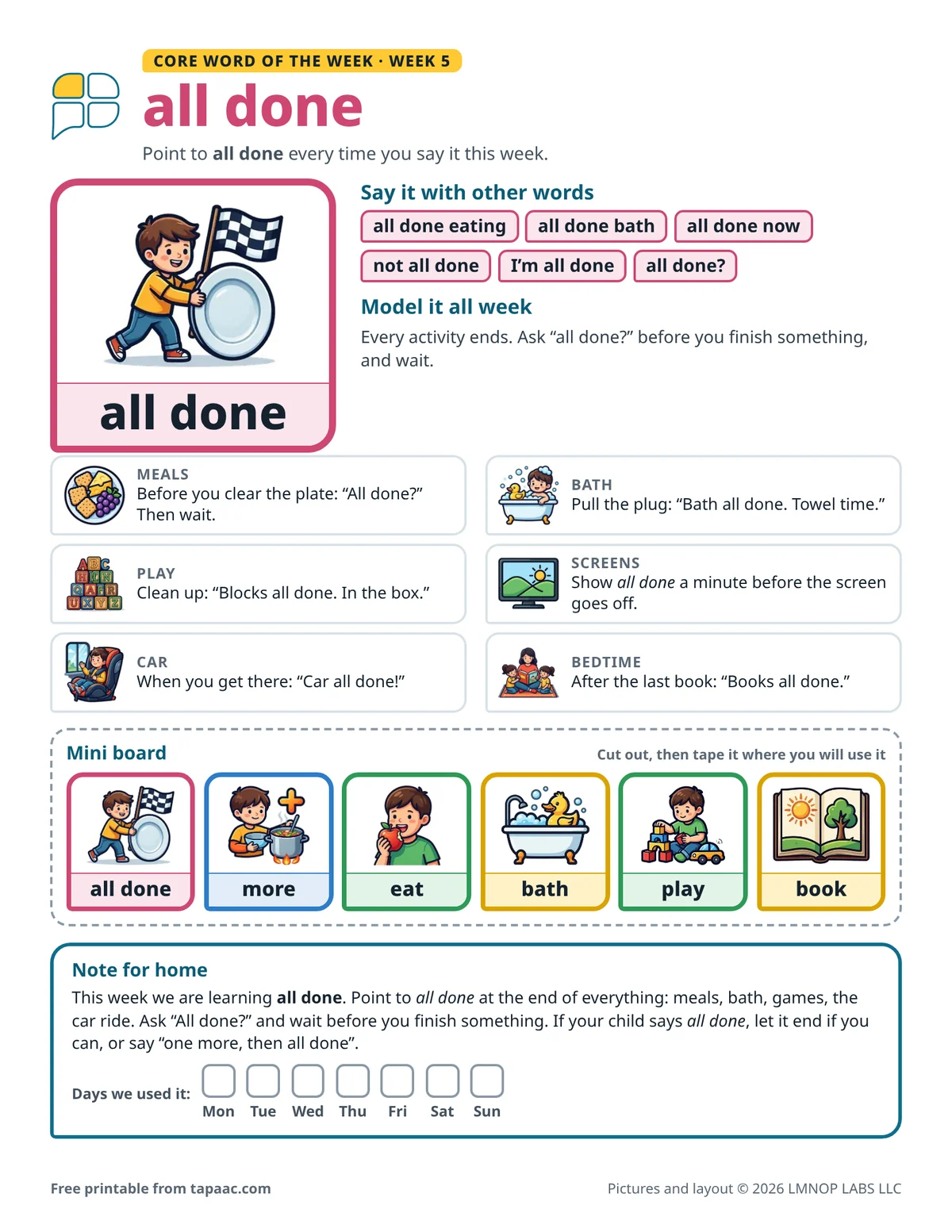
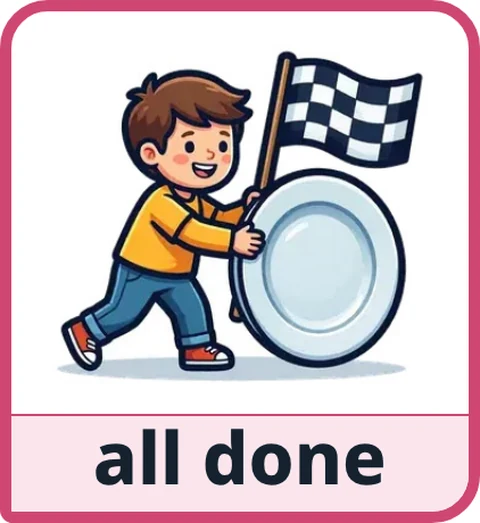
All done tells people something is finished: the meal, the bath, the game. It gives the person a clear, calm way to end things, instead of pushing them away or walking off. This week, point to all done at the end of every routine, and let things end when the person says it, if you can.
Download the free printable (PDF) US Letter, 1 page, 450 KB
Printing on A4 paper? Download the A4 PDF (1 page, 449 KB).
Have Tap AAC? Add to Tap AAC (.obz file, 213 KB) · How to add a board
- Week 5 of 32
- Free
- One page
Every ending is a chance to model all done
Every activity ends, so there are many chances a day to model all done. For the person, it is a clear and polite way to say “I’ve had enough”.
It also helps them understand what is happening: when you say “bath all done” and point, they know the bath is over. It pairs with week 1’s more: more, or all done?
All done at plates, plugholes, clean-up and screen time
At meals
- Before you clear a plate: “All done?” Wait. If they point, “All done eating.”
- Model your own: “I’m all done. All done coffee.”
- Offer the choice: “More, or all done?”
In the bath
- Pull the plug: “Bath all done. Towel time.”
In play
- At clean-up time: “Blocks all done. In the box.”
- At the end of a song: “Song all done.”
Screens
- A minute before the tablet or TV goes off, show all done: “All done soon.” Show it again when it goes off.
Out and about
- When you arrive: “Car all done. We’re here.”
- Leaving the playground: “Swings all done. Bye, swings.”
At school, therapy and bedtime
- At the end of a task: “All done. Good work.”
- Offer it during a hard task, and if the person says it, finish soon: “One more, then all done.”
- After the last book: “Books all done. Time to sleep.”
Lunch at the table. Sam pushes his bowl away and starts to slide off his chair. His mom catches his eye and points to all done on the mealtime board: “All done?” Sam looks at the board and touches all done. “All done eating. Okay.” She takes the bowl and helps him down. The next day she asks “All done?” before the bowl gets pushed, and Sam touches it again.
All done eating, not all done, I’m all done
Say what is finished, or turn it around: not all done is a polite way to ask for a little longer.
- all done eating
- all done bath
- all done now
- not all done
- I’m all done
- all done?
If all done comes too early, or for something that has to happen
If they say all done to something that has to happen
Show you heard it, and make it shorter if you can: “You’re all done. One more, then all done.” For must-do things, a first-then board shows what comes after.
If they say it the moment something starts
Check what might be wrong: too loud, too hard, too long. Let it end, then try again later, shorter or in a different way.
Note for home: ask “All done?” before you finish
This week we are learning all done. Point to all done at the end of everything: meals, bath, games, the car ride. Ask “All done?” and wait before you finish something. If your child says all done, let it end if you can, or say “one more, then all done”.
The same note is printed at the bottom of the week’s page, with a box to tick for each day. For families who are new to modeling, send the one-page AAC modeling at home handout with it, and keep using the word cards from earlier weeks.
More core word of the week plans
-
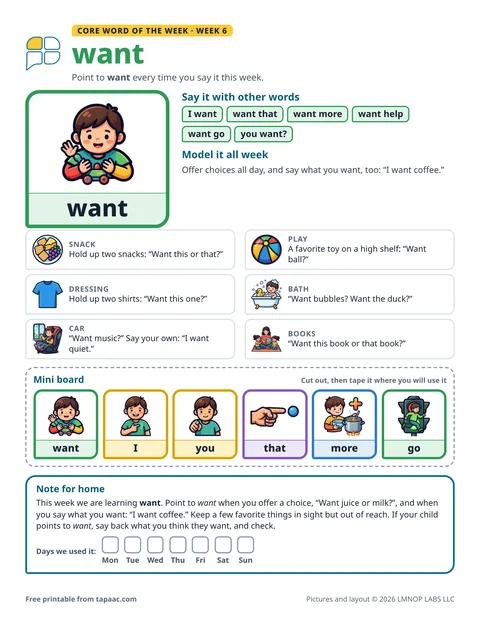 Week 6: wantChoices all day: want this or that? I want...
-
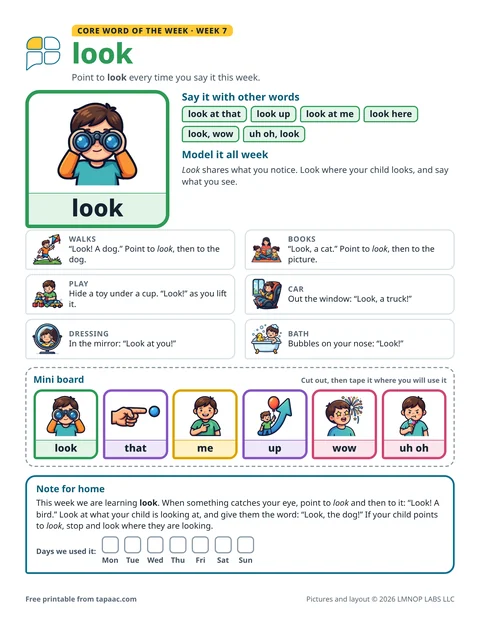 Week 7: lookShare what you notice: look, a dog! Look at me!
-
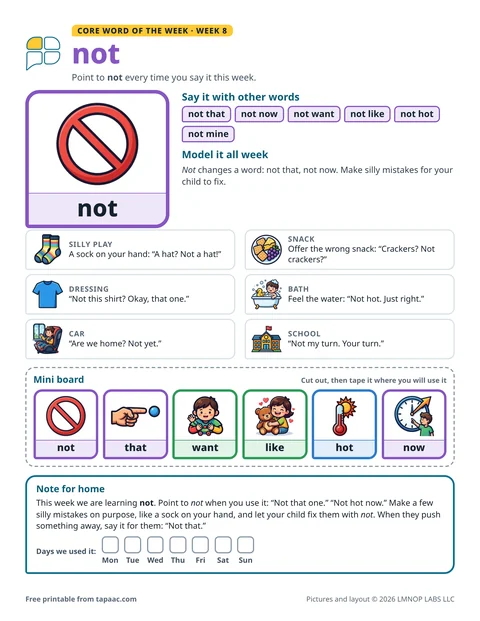 Week 8: notChange a word: not that, not now, not hot. And fix silly mistakes.
-
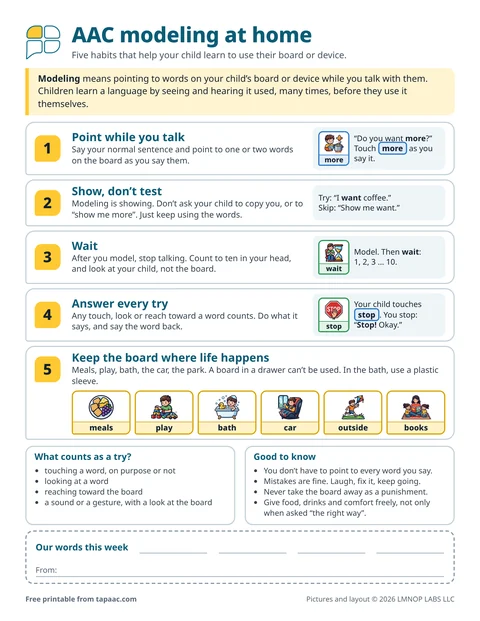 AAC modeling at homeFive habits on one page, to send home or stick on the fridge.
All core word printables and guides
Need a different board? Make your own with the free AAC board maker.
These cards, handouts and plans are general information, not therapy or medical advice, and they don’t replace a speech therapist. A speech therapist who knows the person can help choose the right words and the right way to practice. Everything here is free to print and share; please don’t sell it (terms of use). Questions? Email support@lmnoplabs.fun.