 Tap AAC
Core word “on”: switching things on, putting things on
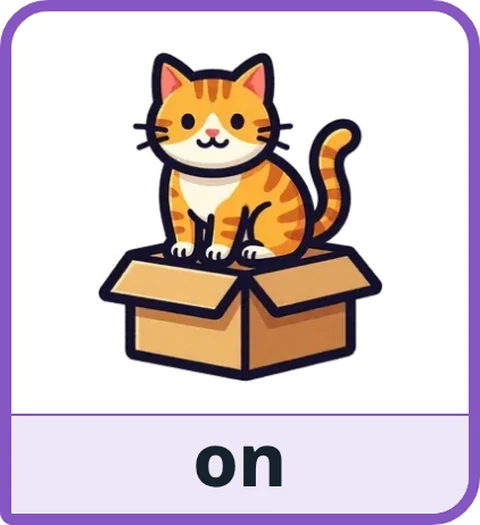
On has two everyday jobs. It says where something is, like on the table or on your head, and it asks for things to start: lights on, music on, turn it on. This week, point to on whenever you switch something on or put something on, and wait at the switch so the person can ask for it.
Download the free printable (PDF) US Letter, 1 page, 398 KB
Printing on A4 paper? Download the A4 PDF (1 page, 398 KB).
Have Tap AAC? Add to Tap AAC (.obz file, 190 KB) · How to add a board
- Week 29 of 32
- Free
- One page
Why on gives the person a say
On gives the person a say over the things around them: the light, the music, the fan, the bath tap, the TV. Every switch is a small, quick reward, and off on the mini board ends it again, as go and stop do in weeks 2 and 3.
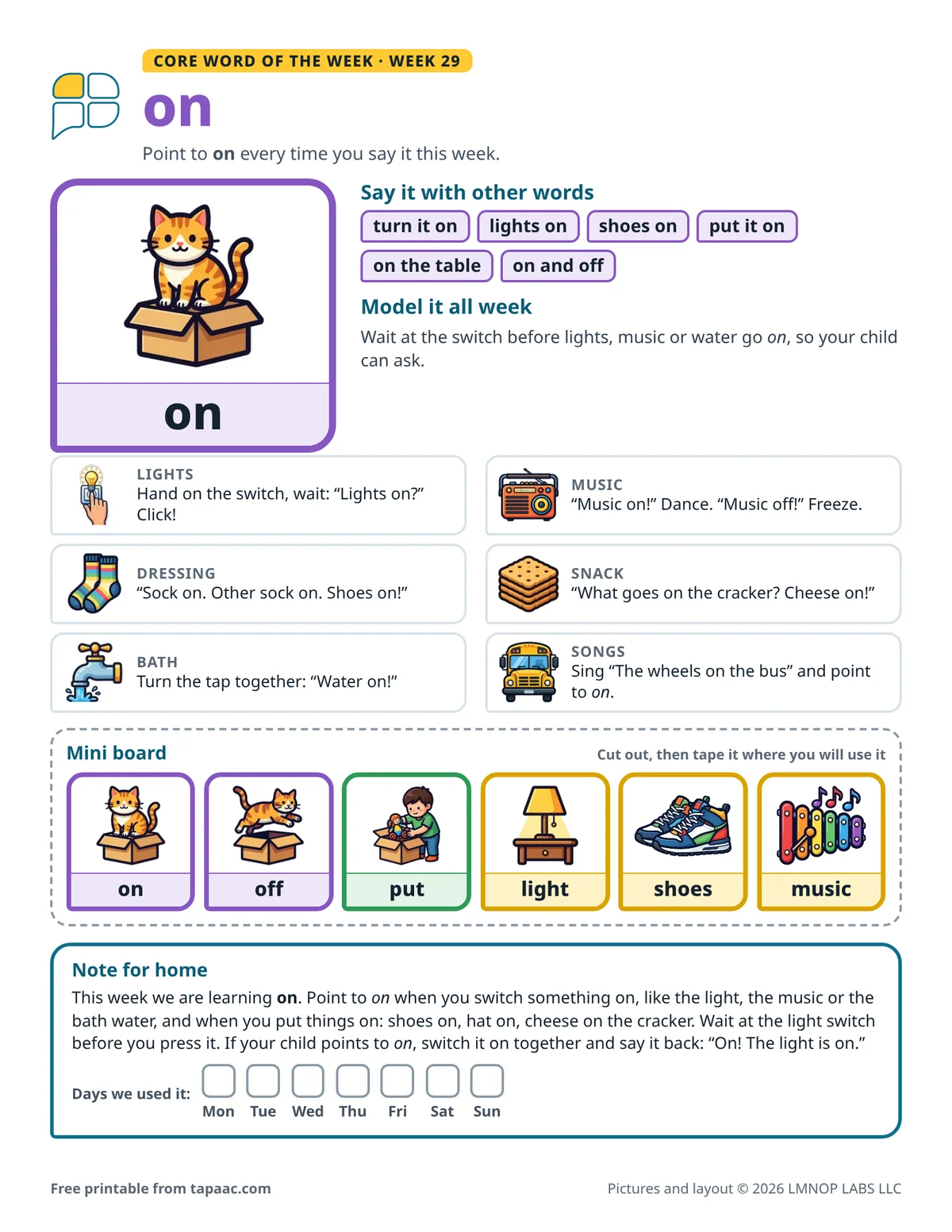
It also finishes phrases from earlier weeks: put on (week 20), get on (week 22), on the table. The on card shows a cat on top of a box, and week 19’s in card a cat inside one, so the two are easy to tell apart and compare.
Switch it on, put it on: lights, hats, crackers and buses
Switches
- At the light switch, put your hand on it and wait: “Lights on?” Switch it on the moment the person answers.
- Fans, night lights, the hairdryer, the blender: anything with a switch is a chance to say “On!” and then “Off.”
Music and screens
- Play music and dance, then stop it: “Music off.” Freeze, and wait. “Music on?”
- With older children and teens: “TV on? Which show?” Let the person be the one who asks for it.
Getting dressed
- Name each thing as it goes on: “Sock on. Other sock on. Shoes on!”
- At the door on a cold day, hold up the hat and wait: “Hat on? Brr.”
Snack
- Make crackers or toast together: “What goes on? Cheese on! Jam on!”
Bath
- Turn the tap together: “Water on!” When it’s full: “Water off,” and in you get.
In the car
- “Seat belt on.” Click it together, then ask: “Music on?”
Songs and riding
- Sing “The wheels on the bus” and point to on in every verse.
- Bikes, scooters and ride-on toys: stand by the seat and wait: “Get on?”
At school or therapy
- Use a toy, a fan or a bubble machine with a big button, and say “on” every time it starts.
It is getting dark in the living room. Yusuf, who is 10, is on the floor with a jigsaw. His dad stands by the light switch and points to on on Yusuf’s board: “Lights on? It’s getting dark.” He keeps his hand on the switch and waits. Yusuf looks up, then at the board, and taps on. Click. “On! Now we can see the pieces.” After dinner, before his dad has even sat down, Yusuf taps music and on.
Lights on, shoes on, on and off
On does two jobs, switching things on and putting things on, so model both kinds.
- turn it on
- lights on
- shoes on
- put it on
- on the table
- on and off
If everything has to be on, or you can’t tell a switch from a place
If they want everything on, over and over
Switching things on and off is fun, and that’s fine for a while. Then give it an end: “Light on... one more time, then all done.” For things that must stay off, like the oven, say why: “Not on. Hot.”
If you can’t tell whether on means a switch or a place
Look at what they are near. By the TV it probably means “turn it on”; holding a hat, “put it on”. Say your best guess and do it: “On? TV on?” If you guessed wrong, they can tell you.
Note for home: wait at the light switch before you press it
This week we are learning on. Point to on when you switch something on, like the light, the music or the bath water, and when you put things on: shoes on, hat on, cheese on the cracker. Wait at the light switch before you press it. If your child points to on, switch it on together and say it back: “On! The light is on.”
The same note is printed at the bottom of the week’s page, with a box to tick for each day. For families who are new to modeling, send the one-page AAC modeling at home handout with it, and keep using the word cards from earlier weeks.
More core word of the week plans
-
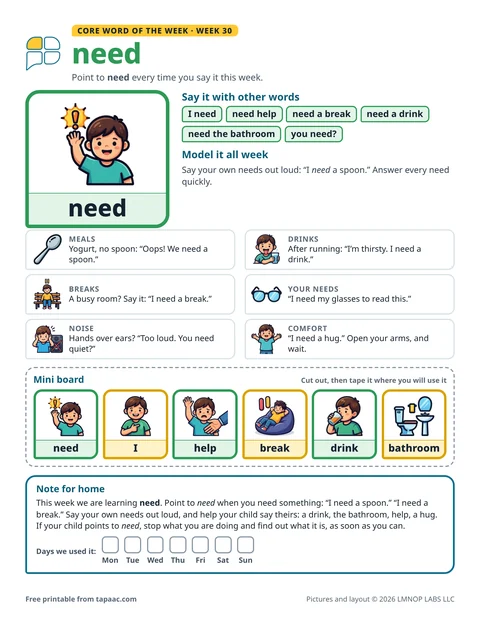 Week 30: needThings that can’t wait: I need help, I need a break.
-
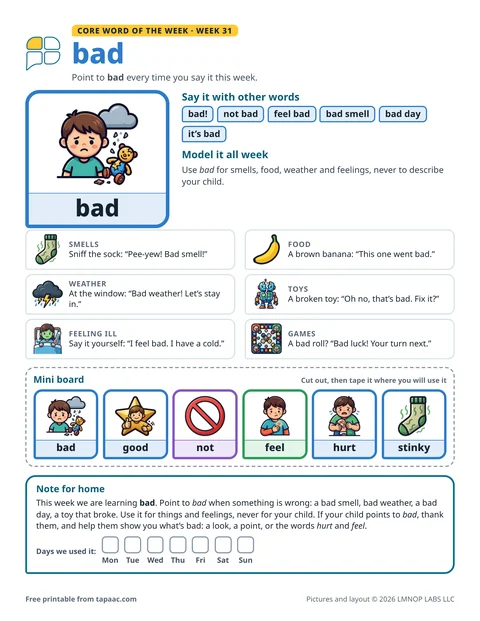 Week 31: badSay what’s wrong: bad smell, bad day, feel bad.
-
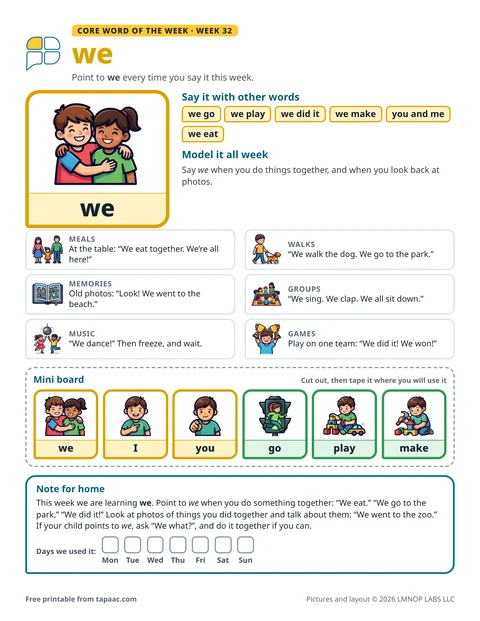 Week 32: weDo it together: we go, we play, we did it!
-
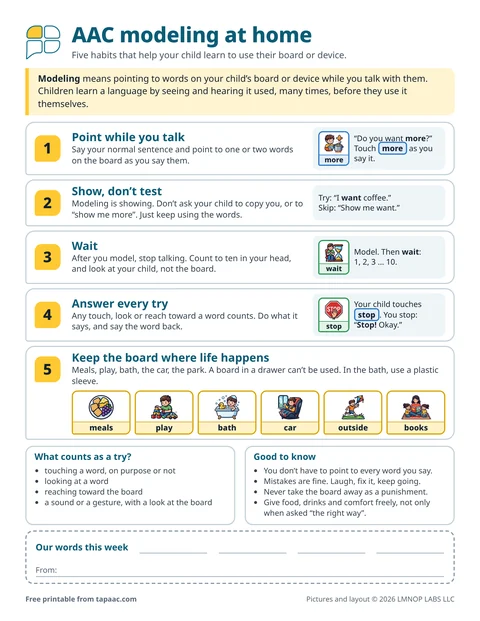 AAC modeling at homeFive habits on one page, to send home or stick on the fridge.
All core word printables and guides
Need a different board? Make your own with the free AAC board maker.
These cards, handouts and plans are general information, not therapy or medical advice, and they don’t replace a speech therapist. A speech therapist who knows the person can help choose the right words and the right way to practice. Everything here is free to print and share; please don’t sell it (terms of use). Questions? Email support@lmnoplabs.fun.