 Tap AAC
Core word “need”: saying it before a hard moment builds up
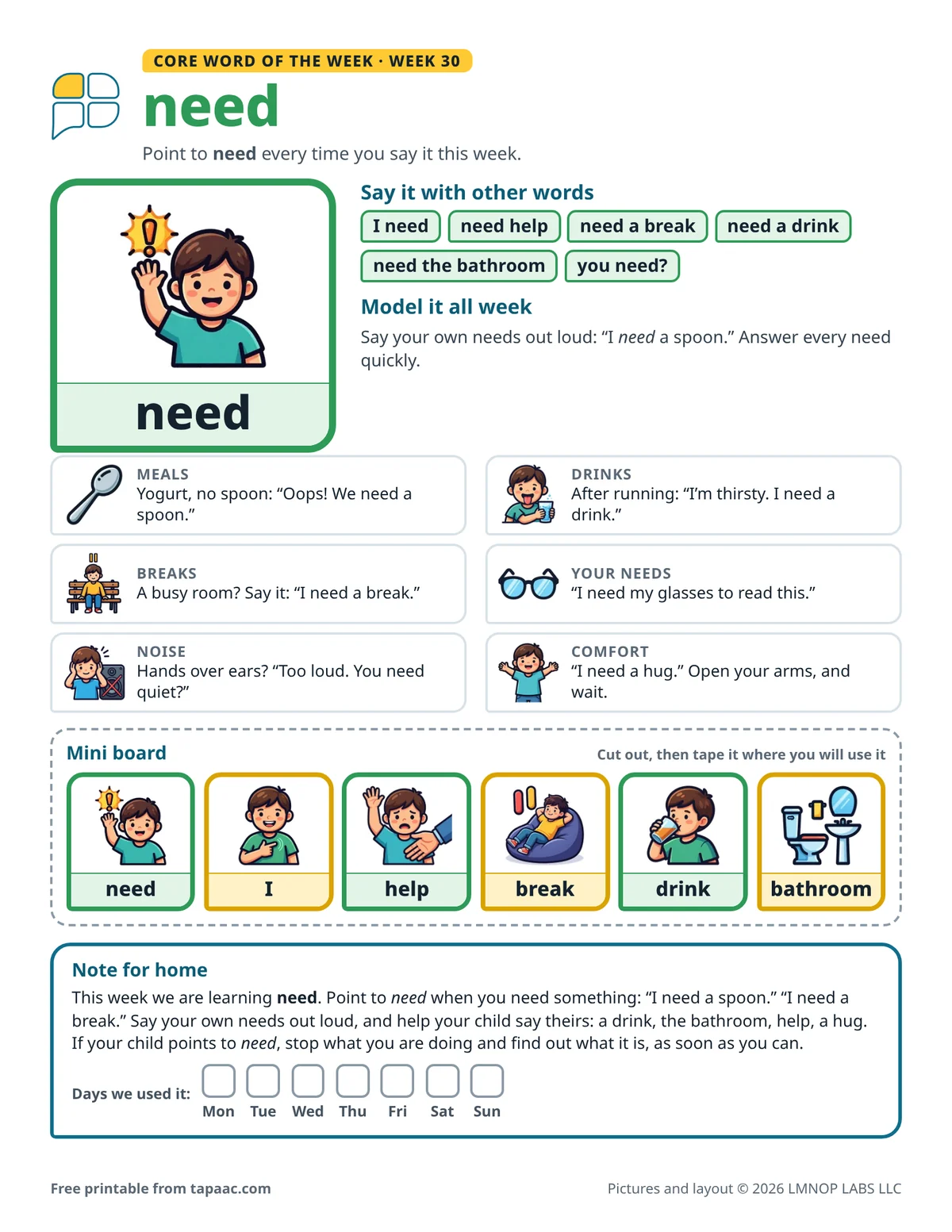
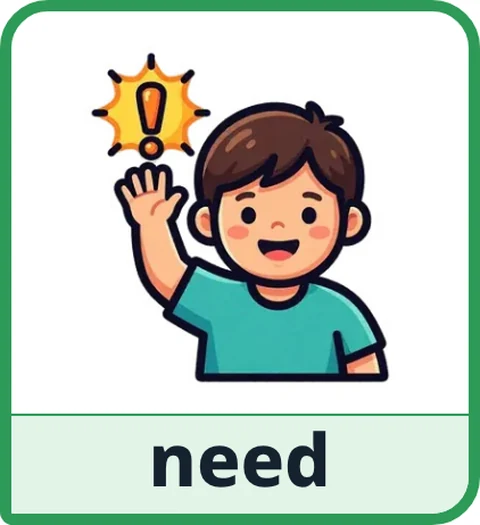
Need is for things a person must have, often right now: I need help, I need a break, I need the bathroom. It tells the people around them that this can’t wait. This week, point to need whenever you need something yourself, and help the person tell you what they need.
Download the free printable (PDF) US Letter, 1 page, 383 KB
Printing on A4 paper? Download the A4 PDF (1 page, 383 KB).
Have Tap AAC? Add to Tap AAC (.obz file, 196 KB) · How to add a board
- Week 30 of 32
- Free
- One page
Want or need? Why the difference matters
Want (week 6) asks for something nice. Need says it matters: a drink when they are thirsty, a break when a room is too loud, the bathroom. Saying it clearly, before a hard moment builds up, helps everyone.
It builds on week 11’s I and week 4’s help: I need help is one of the most useful sentences there is. Don’t worry if want and need get mixed up at first. Answer the message, and show the difference in the way you talk.
Missing spoons, loud rooms and hugs: when you need something
Meals
- Hand over a yogurt without a spoon, or juice without a cup, and wait: “Oops! We need a spoon.”
- While you cook, say what you need: “I need the salt. I need a big pan.”
Drinks and the bathroom
- After running around: “Phew, I’m thirsty. I need a drink.” Then get one together.
- Before you leave the house, say it plainly for yourself: “I need the bathroom first.”
Breaks and noise
- When a place gets loud or busy, model it for yourself: “Too loud. I need a break.” Step outside together for a minute.
- If the person covers their ears or heads for the door, give them the words: “You need quiet? Let’s go.”
Getting ready
- Before an outing, check together: “What do we need? Coat, keys, water.”
- Your own things, out loud: “I need my glasses to read this.” “I need my phone.”
Feelings and comfort
- Say it when you feel it: “I need a hug.” Open your arms and wait.
- After a hard moment, offer both: “Do you need a hug, or some space?” Then respect the answer.
At school, work or therapy
- Keep need, help, break and bathroom where the work happens, and point to them as you hand out a task: “If you need help, tell me.”
- With adults at work or a day program: “Do you need anything before we start?” Wait, and look at the board together.
Alex, who is 22, goes to a day program three mornings a week. Today the room is busy: a radio, a group game, a vacuum cleaner out in the hall. His support worker sees him cover his ears and look at the door. She points to I and need on his board: “Do you need something?” and waits. Alex taps need, then break. “You need a break. Thank you for telling me.” They sit in the quiet room for ten minutes. On the way back, Alex taps I, need and drink, and they stop at the water cooler.
I need help, need a break, need the bathroom
Keep the words for the person’s most urgent needs right next to need on the board.
- I need
- need help
- need a break
- need a drink
- need the bathroom
- you need?
If everything is a need, or you can’t meet it straight away
If they say need for everything
That’s fine at first: the word worked, so they use it. Answer it, and keep showing the difference in your own talk: “I need my coat. I want a cookie.”
If you can’t meet the need straight away
Say that you heard, and how long: “You need the bathroom. Two more minutes, then we stop.” Count down out loud, and stop when you said you would.
Note for home: say your own needs out loud
This week we are learning need. Point to need when you need something: “I need a spoon.” “I need a break.” Say your own needs out loud, and help your child say theirs: a drink, the bathroom, help, a hug. If your child points to need, stop what you are doing and find out what it is, as soon as you can.
The same note is printed at the bottom of the week’s page, with a box to tick for each day. For families who are new to modeling, send the one-page AAC modeling at home handout with it, and keep using the word cards from earlier weeks.
More core word of the week plans
-
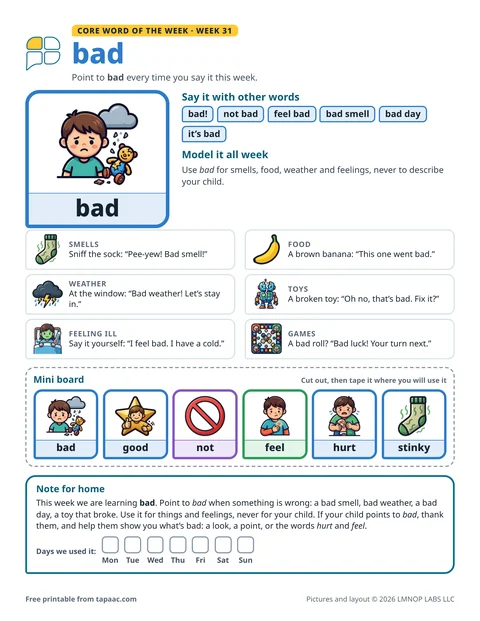 Week 31: badSay what’s wrong: bad smell, bad day, feel bad.
-
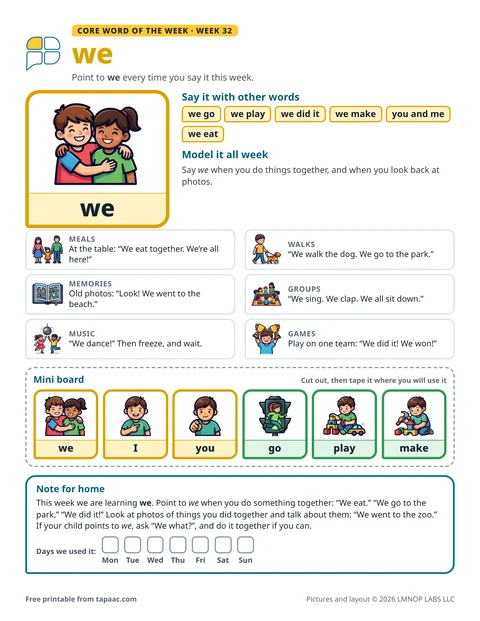 Week 32: weDo it together: we go, we play, we did it!
-
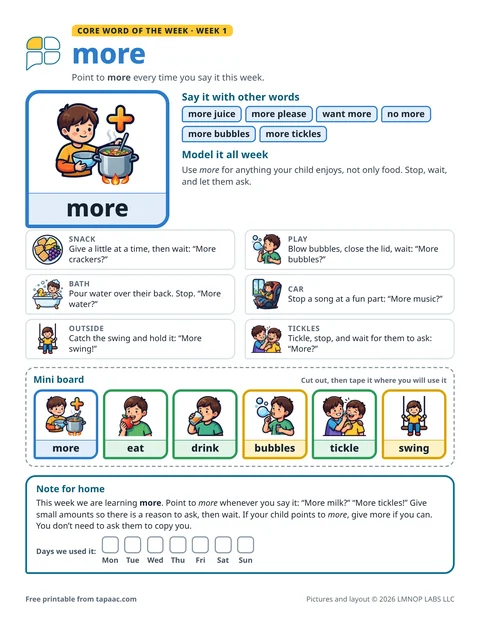 Week 1: moreAsk for more of anything fun: snacks, bubbles, tickles, songs.
-
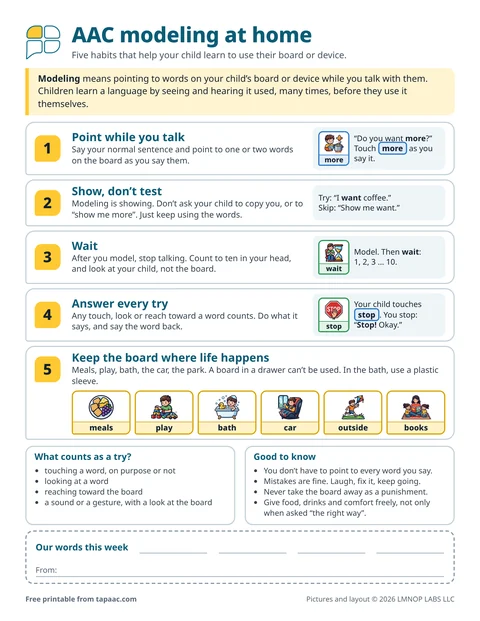 AAC modeling at homeFive habits on one page, to send home or stick on the fridge.
All core word printables and guides
Need a different board? Make your own with the free AAC board maker.
These cards, handouts and plans are general information, not therapy or medical advice, and they don’t replace a speech therapist. A speech therapist who knows the person can help choose the right words and the right way to practice. Everything here is free to print and share; please don’t sell it (terms of use). Questions? Email support@lmnoplabs.fun.