 Tap AAC
Core word “more”: asking for snacks, bubbles and tickles
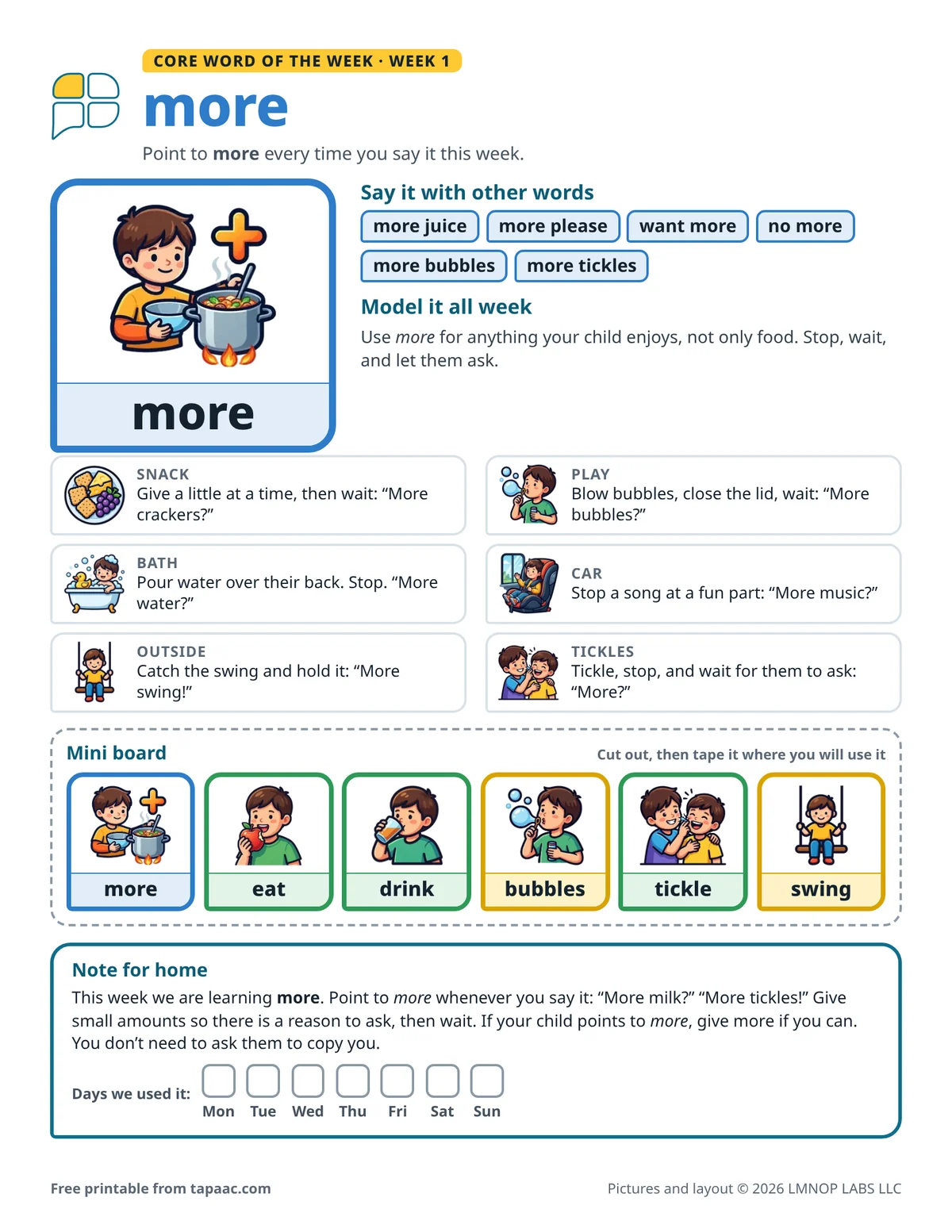
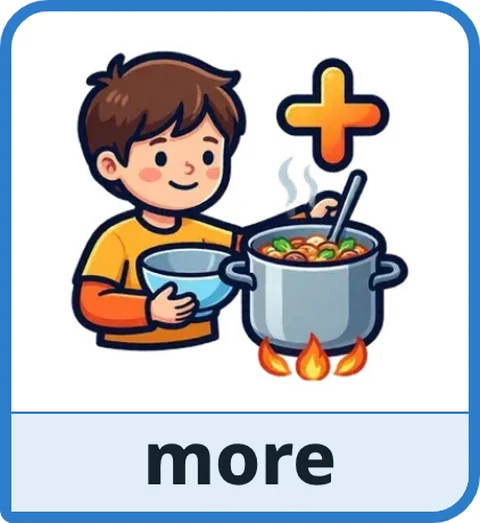
More asks for something to keep going or to come back: more crackers, more bubbles, more tickles. It is a great first word because it works with almost anything the person enjoys, and it gets a quick result. This week, point to more every time you say it, and give more whenever the person asks, if you can.
Download the free printable (PDF) US Letter, 1 page, 451 KB
Printing on A4 paper? Download the A4 PDF (1 page, 451 KB).
Have Tap AAC? Add to Tap AAC (.obz file, 215 KB) · How to add a board
- Week 1 of 32
- Free
- One page
Why more makes a strong first word
More is a request the person can make many times a day, in every routine. Ask, and the fun comes back. That quick, clear result is what makes a word worth using.
It works on its own, with no other words needed, and later it joins others: want more, more please, no more. Use it for things the person loves, not only food: songs, spins, bubbles, pushes on the swing.
Give a little, then wait: more at snack, play, bath and the park
At meals and snack
- Serve small amounts, like two crackers or a sip of juice, so there’s a reason to ask. “More? More crackers.”
- Ask for more yourself: “I want more coffee,” and point to more.
- Pour a little, stop, and wait. If the person looks at the cup or reaches for it, model “more” and pour again.
In play
- Blow bubbles, then put the lid on and wait: “More bubbles?”
- Build a tower one block at a time: “More blocks. More!” Then knock it down together.
- Tickles, spins, rides on your knee: stop in the middle and wait. “More tickles?”
In the bath
- Pour a cup of water over their back. Stop. “More water?”
- Add bath bubbles one squirt at a time: “More bubbles!”
In the car and outside
- Before you drive off, play a favorite song and stop it at the best part: “More music?”
- At the playground, push the swing a few times, then catch it and hold it: “More swing!”
At school or therapy
- At circle time, sing one verse and stop: “More song?”
- Keep a more card on the snack table, so every adult in the room can model it.
Snack time. Mom puts two crackers on the plate. Leo eats them and looks at the box. Mom touches more on the card by his plate: “More? More crackers.” She waits, looking at Leo, not at the card. He pats the table near the card, then touches it. “More crackers! Here you go.” She gives him two more. The next time the plate is empty, Leo reaches for the card before he reaches for the box.
More juice, want more, no more
Once a single more gets results, add the thing they want, or a word that turns the request around.
- more juice
- more please
- want more
- no more
- more bubbles
- more tickles
If more means everything, or the answer has to be no
If the person says more for everything
That’s a good sign: they’ve learned that words make things happen. Answer it, and model the word they might mean next: “More... juice? More swing?” Hold up two choices if you’re not sure.
If you can’t give more
Say what you heard, so they know the word worked: “You want more cookies. Cookies are all done. More apple?” Being understood matters, even when the answer is no.
Note for home: small amounts, then wait for more
This week we are learning more. Point to more whenever you say it: “More milk?” “More tickles!” Give small amounts so there is a reason to ask, then wait. If your child points to more, give more if you can. You don’t need to ask them to copy you.
The same note is printed at the bottom of the week’s page, with a box to tick for each day. For families who are new to modeling, send the one-page AAC modeling at home handout with it, and keep using the word cards from earlier weeks.
More core word of the week plans
-
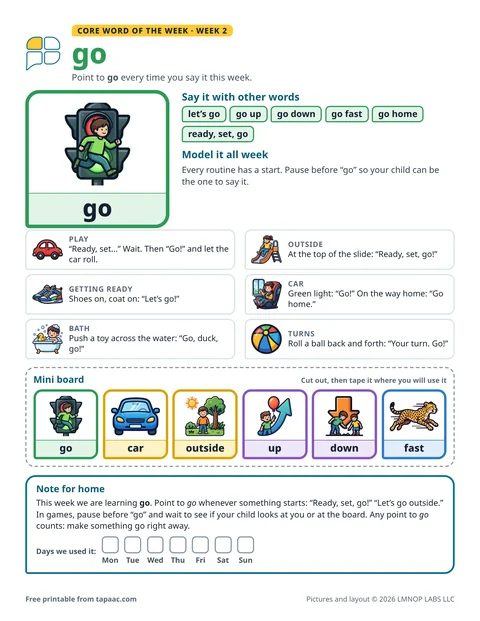 Week 2: goStart the fun: ready, set, go! Cars, slides and walks.
-
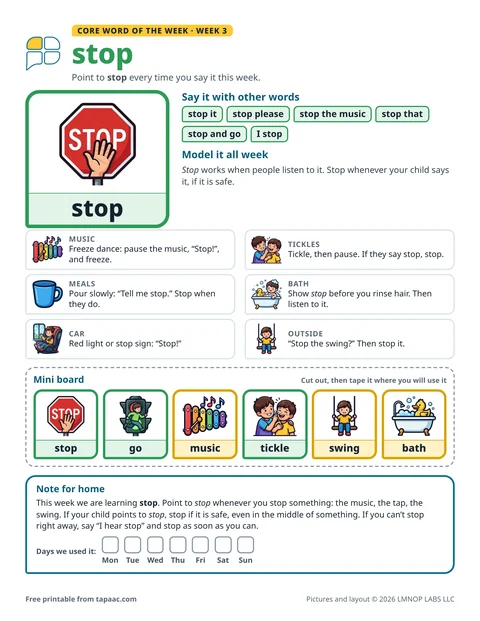 Week 3: stopEnd what isn’t wanted, or freeze a game, and be listened to.
-
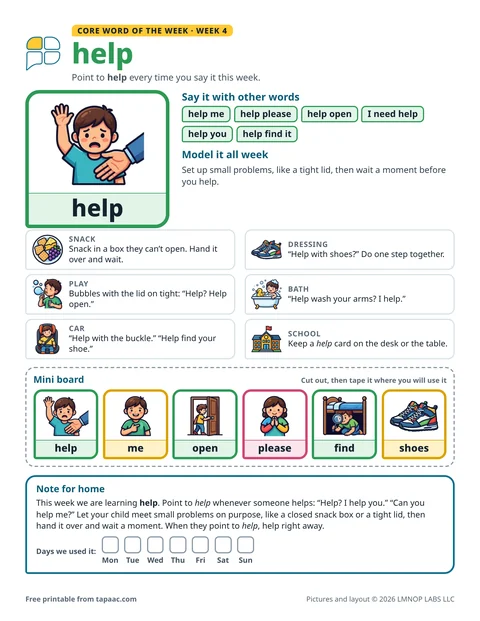 Week 4: helpAsk for help with lids, shoes, toys and hard work.
-
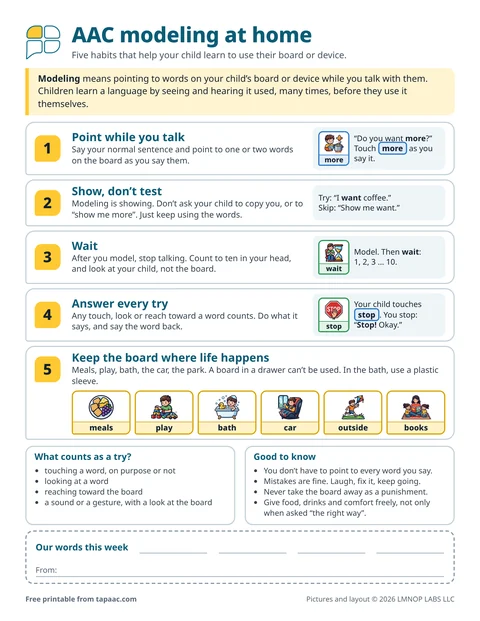 AAC modeling at homeFive habits on one page, to send home or stick on the fridge.
All core word printables and guides
Need a different board? Make your own with the free AAC board maker.
These cards, handouts and plans are general information, not therapy or medical advice, and they don’t replace a speech therapist. A speech therapist who knows the person can help choose the right words and the right way to practice. Everything here is free to print and share; please don’t sell it (terms of use). Questions? Email support@lmnoplabs.fun.