 Tap AAC
Core word “get”: one busy word with many jobs
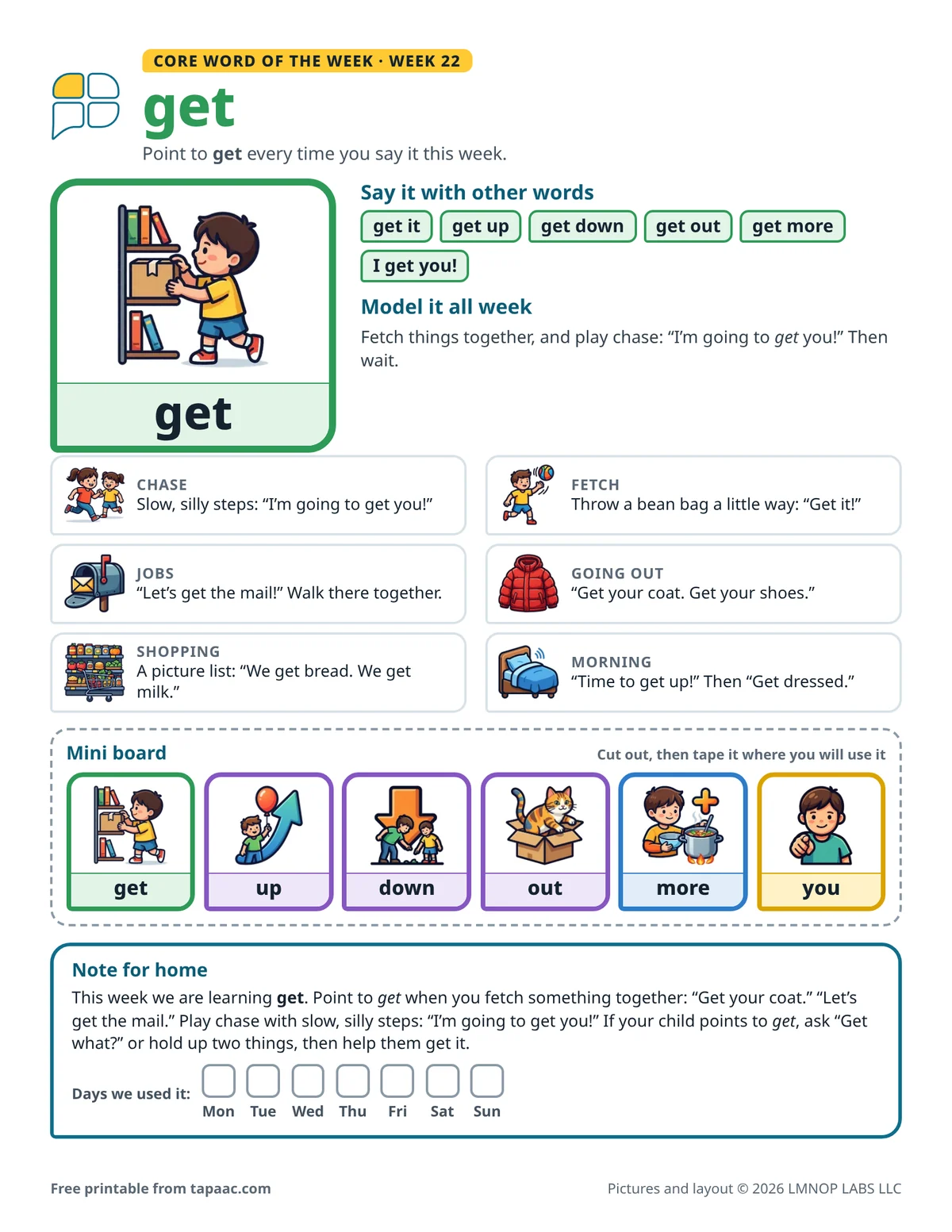
Get means fetching something, and it turns up in lots of phrases: get it, get up, get down, get out, I’m going to get you! It lets a person ask for something that is out of reach, or start a game. This week, point to get whenever you fetch something together, and play a few chase games.
Download the free printable (PDF) US Letter, 1 page, 423 KB
Printing on A4 paper? Download the A4 PDF (1 page, 423 KB).
Have Tap AAC? Add to Tap AAC (.obz file, 202 KB) · How to add a board
- Week 22 of 32
- Free
- One page
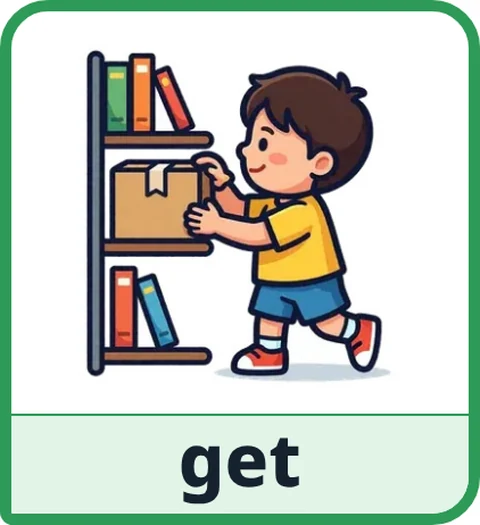
Why get does so much work
Get is one of the busiest verbs in English. With words from earlier weeks it makes whole new meanings: get up, get down, get in, get more. One word, many jobs.
It is also a word for doing things yourself: “I get it” means “I’ll fetch it”. Give the person real jobs, like fetching the mail or a spoon from the drawer, so the word comes with something to do.
“I’m going to get you!”, fetch, the mail and the car door
Games
- Chase: walk toward the person with big, slow, silly steps: “I’m going to get you!” Stop before you catch them, and wait for a look that says “again”.
- Throw a ball or a bean bag a little way: “Get it!” Then take turns fetching.
- Play fetch with a dog: “Get the ball!” The dog does the job, and the word is easy to see.
Around the house
- Give real jobs: “Get a spoon, please.” “Let’s get the mail.” Go along the first few times.
- Ask for help yourself: “Can you get my phone?”
Getting up and out
- In the morning: “Time to get up!” Later: “Get your coat. Get your shoes.”
- At the car: “Get in.” When you arrive: “Get out!”
Shopping
- Make a short shopping list with pictures: “We get bread. We get milk.” Let the person take each one off the shelf.
Snack and meals
- Keep a favorite snack in sight but out of reach, and wait: “Get it? I’ll get it.”
- When a plate is empty: “Get more?” Then walk to the kitchen together.
At school or therapy
- Classroom helper jobs, each with a picture card: “Get the books, please.”
- Obstacle courses: “Get up on the step. Now get down!”
After dinner, Ruby, who is 6, is curled up on the couch. Her dad turns around, crouches low and points to get on the board on the coffee table: “I’m going to get you!” He creeps closer, one giant step at a time, and Ruby squeals as he scoops her up. Then he steps back and waits. Ruby looks at him, grins, and taps get and you. “Get you? Here I come!” Three rounds later, she taps get and points at him: her turn to chase.
Get it, get up, get more
Model the short ones first, like get it, and save I get you! for chase games.
- get it
- get up
- get down
- get out
- get more
- I get you!
If you can’t tell what to get, or chase games get too wild
If they say get and you can’t tell what they want
Follow their eyes and offer your best guesses: “Get... the cup? Get... your tablet?” Holding up two things lets them choose.
If chase games get too wild
Keep the pause in the game: stop, wait for the person to ask, then go. Whoever says “get you” decides when it starts, and week 3’s stop ends it.
Note for home: fetch things together, and ask “Get what?”
This week we are learning get. Point to get when you fetch something together: “Get your coat.” “Let’s get the mail.” Play chase with slow, silly steps: “I’m going to get you!” If your child points to get, ask “Get what?” or hold up two things, then help them get it.
The same note is printed at the bottom of the week’s page, with a box to tick for each day. For families who are new to modeling, send the one-page AAC modeling at home handout with it, and keep using the word cards from earlier weeks.
More core word of the week plans
-
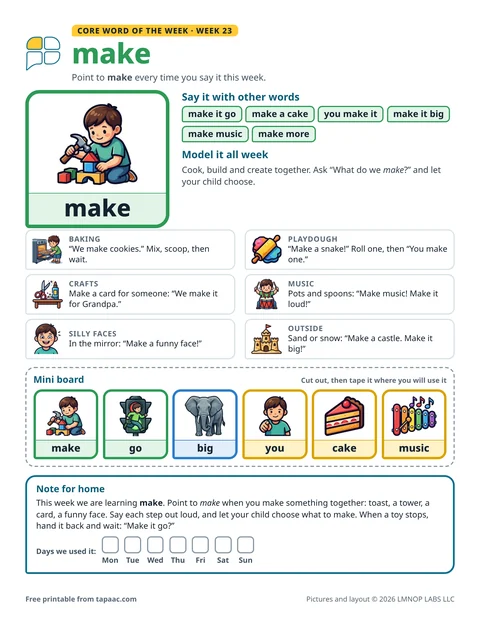 Week 23: makeCook, build and create: make it, make it go.
-
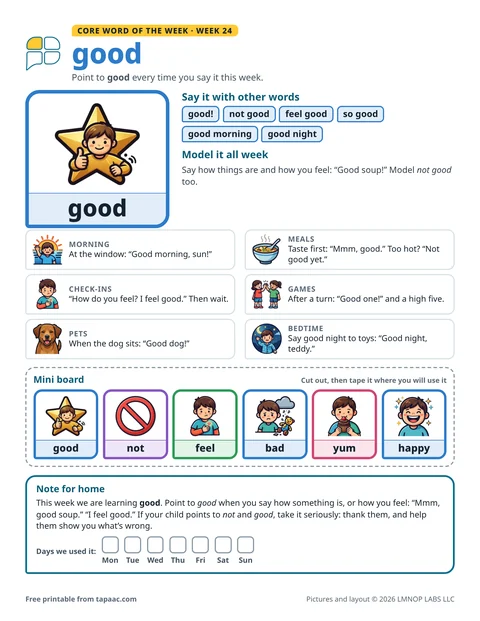 Week 24: goodHow things are, and how you feel: good, not good.
-
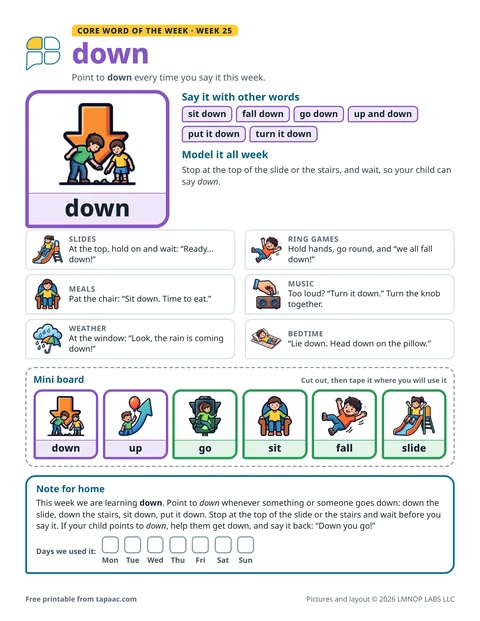 Week 25: downSlides, stairs and “we all fall down”: the partner of up.
-
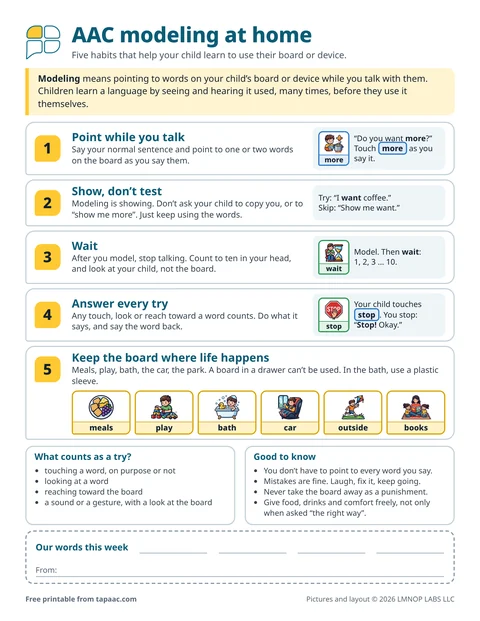 AAC modeling at homeFive habits on one page, to send home or stick on the fridge.
All core word printables and guides
Need a different board? Make your own with the free AAC board maker.
These cards, handouts and plans are general information, not therapy or medical advice, and they don’t replace a speech therapist. A speech therapist who knows the person can help choose the right words and the right way to practice. Everything here is free to print and share; please don’t sell it (terms of use). Questions? Email support@lmnoplabs.fun.