 Tap AAC
Chore chart with pictures: free printable
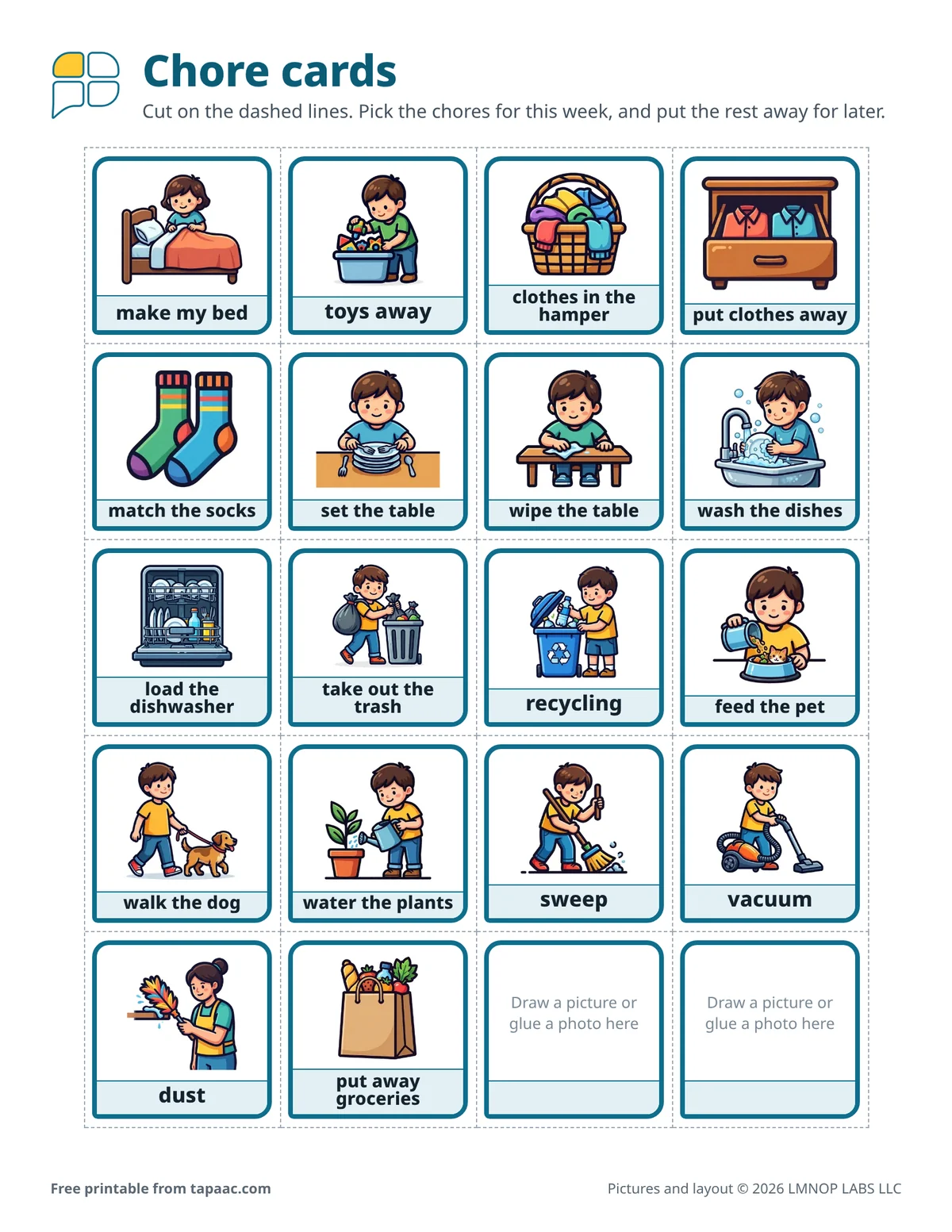
A chore chart with pictures shows a child, without reading, which jobs are theirs this week and which are done: each chore has a picture, and each day has a box to tick. This free PDF has a ready-made weekly chart (make my bed, toys away, feed the pet, set the table), a blank chart with spaces for your own chore cards, and 18 chore cards to cut out, from making the bed to putting away the groceries.
Download the free PDF US Letter, 3 pages, 1,189 KB
Portrait (tall page, 3 pages): US Letter PDF (1,189 KB) · A4 PDF (1,192 KB)
Landscape (wide page, 3 pages): US Letter PDF (1,189 KB) · A4 PDF (1,186 KB)
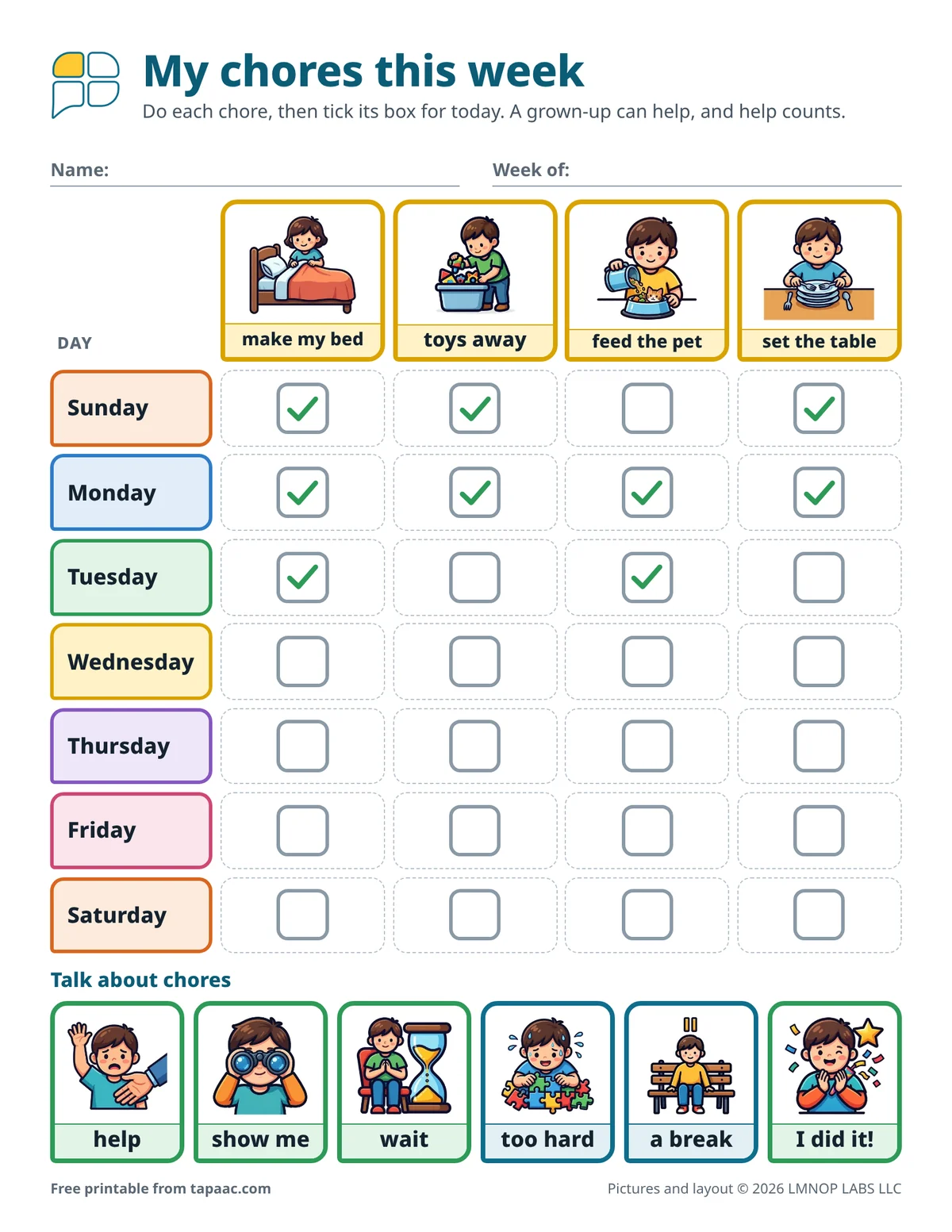
Edit this board in the free board maker: change the words and pictures, then print.
Have Tap AAC? Add to Tap AAC (.obz file, 862 KB) · How to add a board
- Free
- No sign-up
- Print as many as you need
Who it’s for
Children who are starting to help at home, and the grown-ups who would like the help to happen without a daily argument. The pictures suit children who don’t read yet, children who use pictures to know what comes next, including autistic children, and children who don’t speak or don’t speak much. Teens can use the blank chart and the cards for jobs like the dishwasher, the trash and the laundry.
How to use it
- Start small. Two or three chores is plenty at first, and one is fine for a young child. Pick jobs your child can almost do already, so the chart starts with success.
- Show each chore before you ask for it. Do it together the first few times, and point to the picture as you go: “Make my bed. Pull up the covers.”
- Pick a time and a place. Make the bed after breakfast, feed the pet before dinner. Hang the chart where the chores happen, at your child’s eye level.
- Let your child tick the box. Ticking it off is part of the fun, and it shows how much of the week is done.
- Swap chores as they get easy. Glue a card from page 3 over a chore on page 1, or start a fresh chart on page 2.
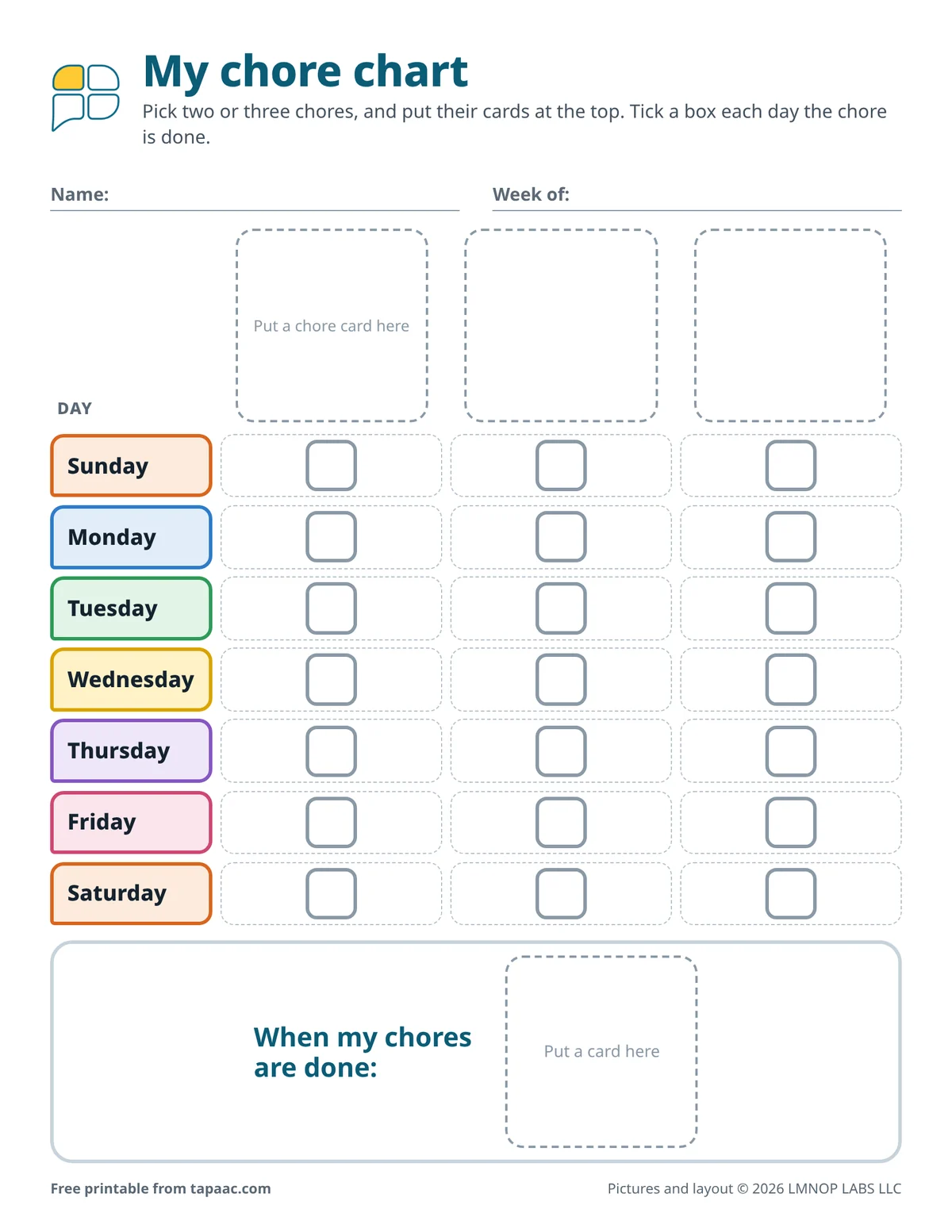
Words for doing chores together
The row at the bottom of page 1 is for talking while you work: help, show me, wait, too hard, a break and I did it! A child who can say too hard or show me has another way out of a job besides walking away. When your child points to help, help, and count it as a chore done together. Point to I did it! yourself when a job is finished, so the words get used.
The blank chart has a space at the bottom for a card: what happens when the chores are done. A favorite activity there works like a first-then board, and the same card can stay for the whole week.
Ava is six. On Sunday she and her mom choose two cards for the blank chart, feed the pet and toys away, and put the swing card at the bottom. Each evening Ava feeds the cat with her mom, then points to the box for Monday and ticks it. On Wednesday the toys are everywhere and she points to too hard. Her mom points to help and they put the toys away together. Ava ticks the box, then points to I did it!
What’s on the PDF
Chores on the weekly chart
- make my bed
- toys away
- feed the pet
- set the table
Talk about chores
- help
- show me
- wait
- too hard
- a break
- I did it!
Chore cards
- make my bed
- toys away
- clothes in the hamper
- put clothes away
- match the socks
- set the table
- wipe the table
- wash the dishes
- load the dishwasher
- take out the trash
- recycling
- feed the pet
- walk the dog
- water the plants
- sweep
- vacuum
- dust
- put away groceries
Printing tips
- Slide the chart into a sheet protector and tick with a dry-erase marker, so one copy lasts all year.
- The chore cards are the same size as the cards for the morning routine chart and the first-then board, so they fit the same slots and hook-and-loop dots.
- For one big job broken into steps, use the clean my room checklist or the laundry visual schedule.
- Ideas for fitting pictures into everyday routines: visual supports for everyday routines, and fitting AAC into the day you already have.
More free boards
-
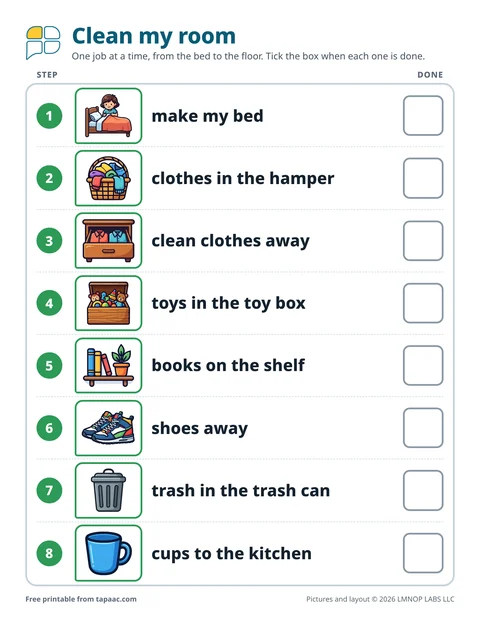 Clean my room checklistEight jobs from making the bed to the cups in the kitchen, the steps of making a bed, and where things go.
-
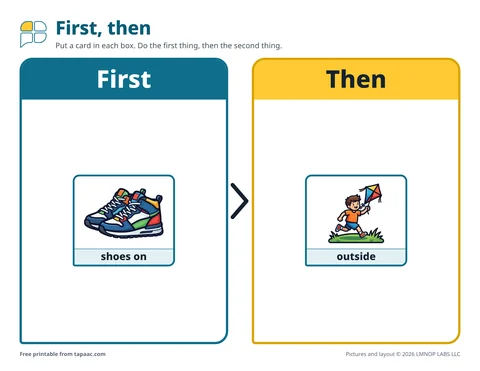 First-then boardShows what happens first and what comes next. With 12 picture cards to cut out.
-
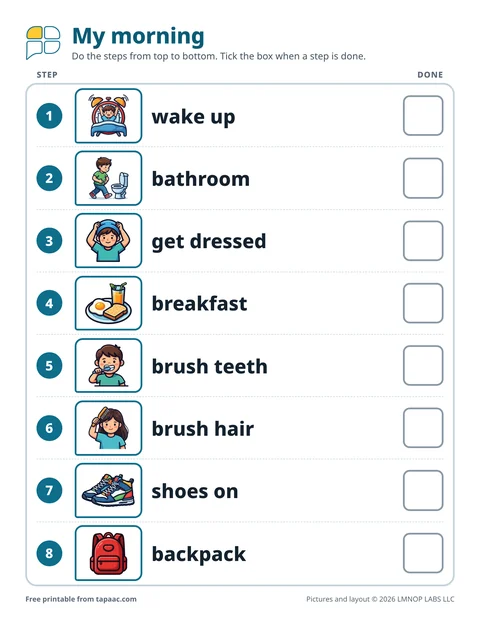 Morning routine chartEight steps from wake up to backpack, with picture cards and a make-your-own schedule.
-
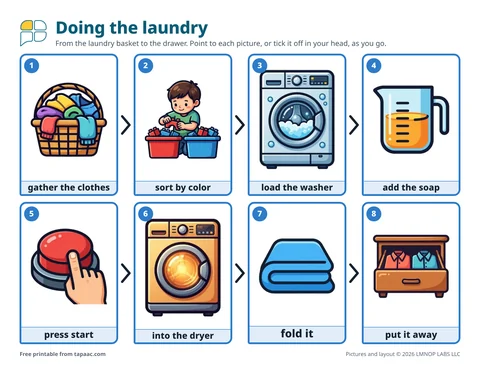 Laundry visual scheduleEight steps from the laundry basket to the drawer, folding steps for a towel and a T-shirt, and laundry words.
Need a different board? Make your own with the free AAC board maker.
These boards and guides are general information, not therapy or medical advice, and they don’t replace a speech therapist. A speech therapist who knows the person can help choose the right words, pictures and layout. The boards are free to print and share; please don’t sell them (terms of use). Questions about the boards? Email support@lmnoplabs.fun.