 Tap AAC
Morning routine chart: free printable visual schedule
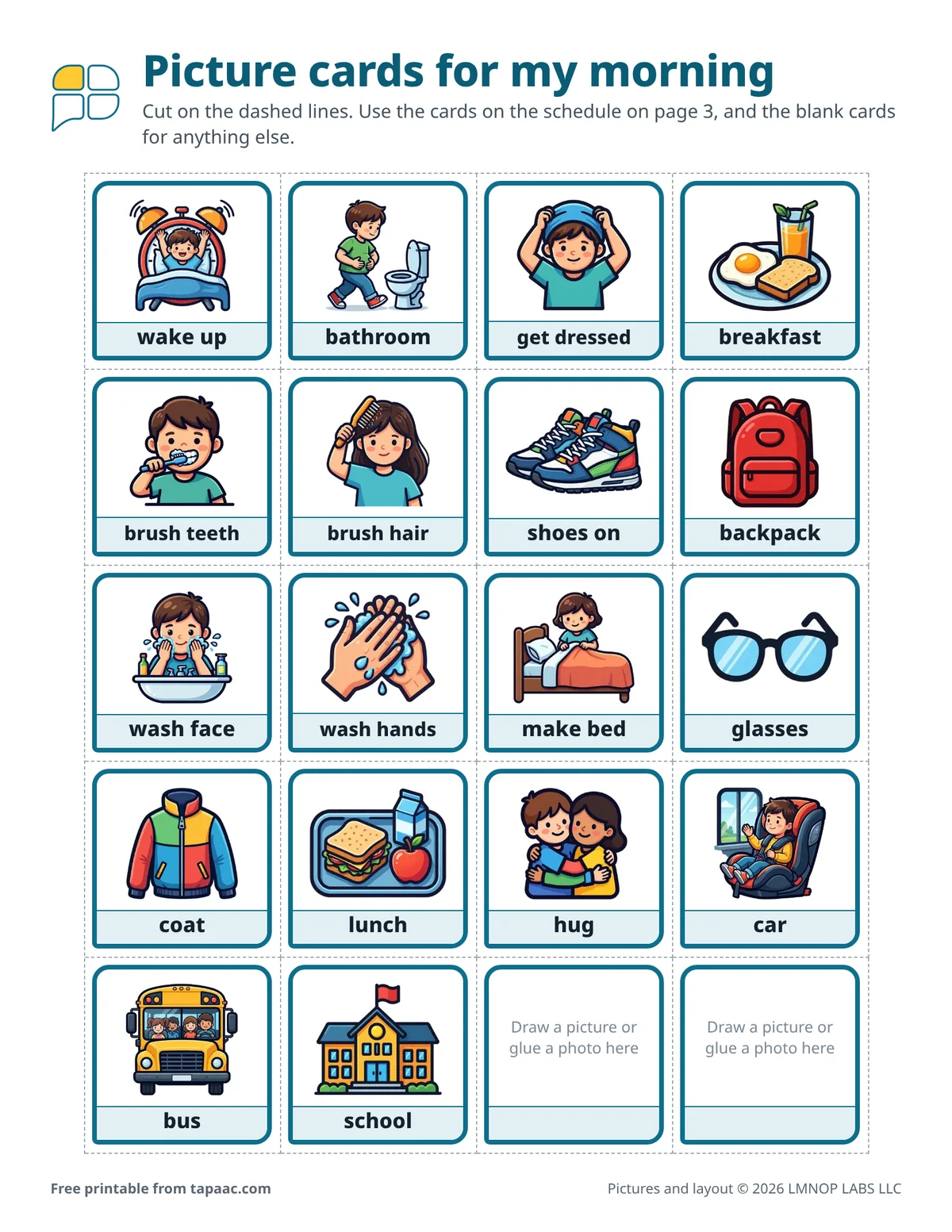
A morning routine chart shows the steps of getting ready as pictures, in order, so a child can see what comes next without being told again. This free PDF has a ready-made picture checklist, from wake up to backpack, plus 20 picture cards and a To do and Done schedule for building your own.
Download the free PDF US Letter, 3 pages, 774 KB
Printing on A4 paper? Download the A4 PDF (3 pages, 774 KB). Or pick one page shape for every page:
Portrait (tall page, 3 pages): US Letter PDF (777 KB) · A4 PDF (776 KB)
Landscape (wide page, 3 pages): US Letter PDF (771 KB) · A4 PDF (775 KB)
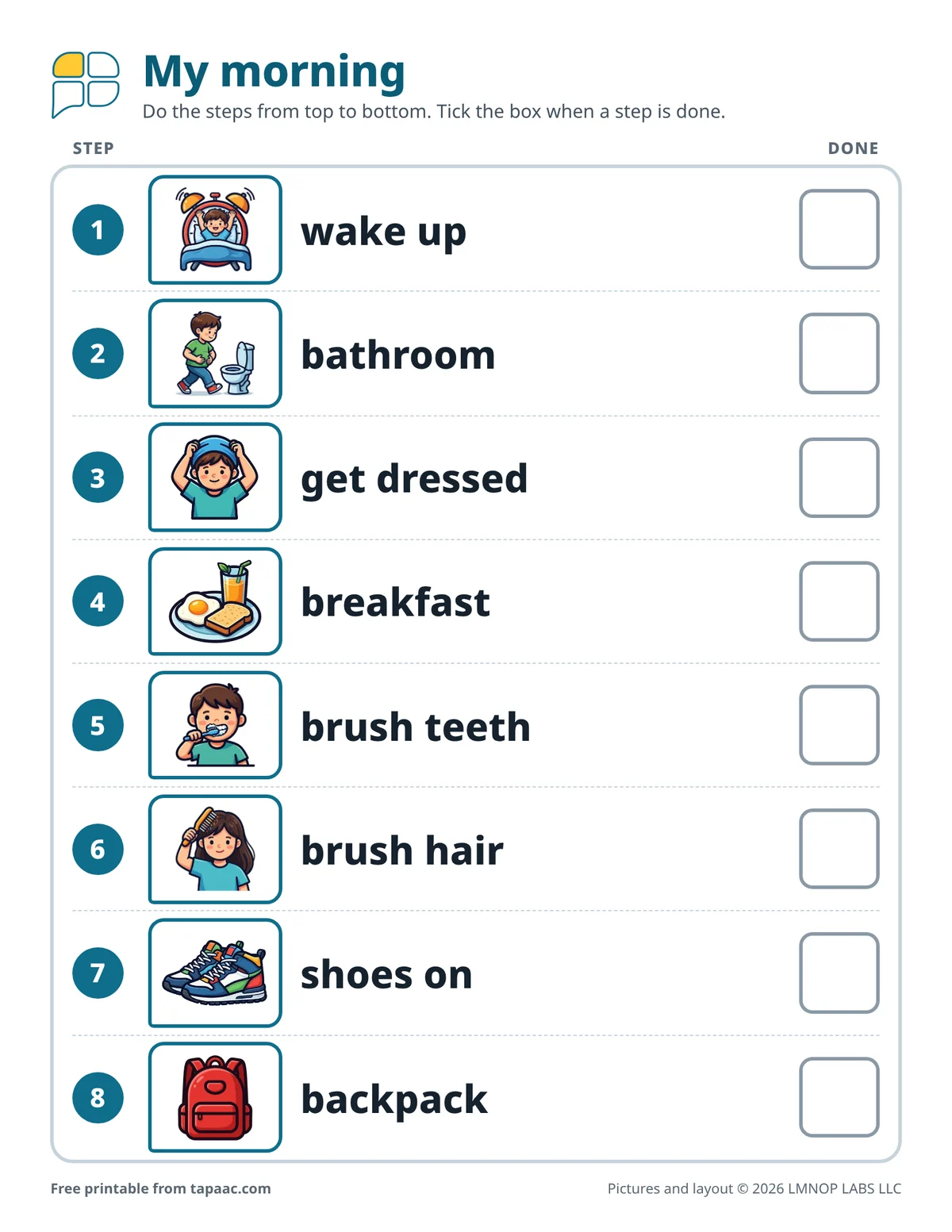
Edit this board in the free board maker: change the words and pictures, then print.
Have Tap AAC? Add to Tap AAC (.obz file, 626 KB) · How to add a board
- Free
- No sign-up
- Print as many as you need
How to use a morning routine chart
- Walk through it together first. On a calm morning, go step by step and point to each picture as you do it.
- Put it where the morning happens. At the child’s eye level, by the bedroom door or the bathroom, not in a drawer.
- Point instead of repeating yourself. “What’s next?” and a point to the chart can take the place of the tenth reminder.
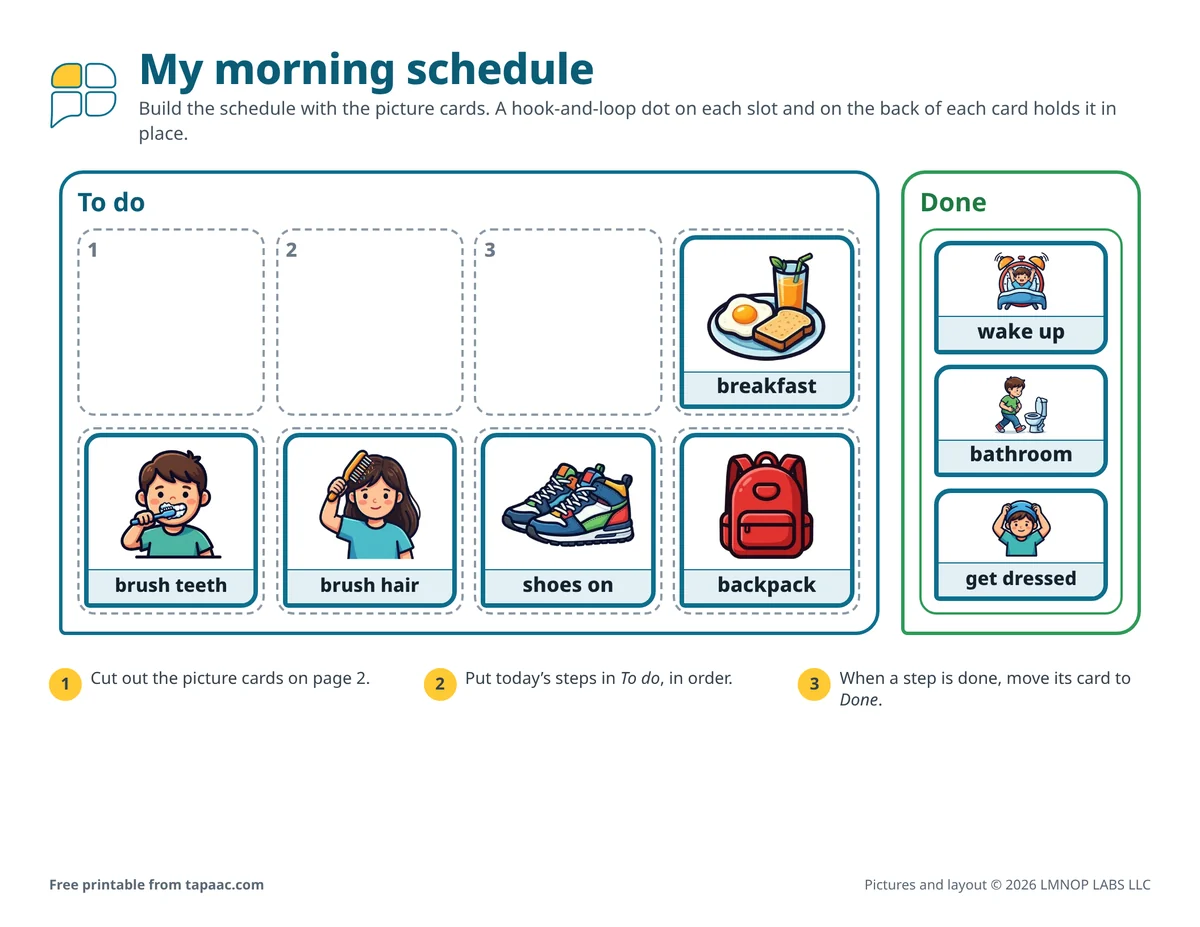
- Tick it off, or move the card. Use a dry-erase marker on a laminated checklist, or move each card from To do to Done.
- End on something good. When the last step is the backpack, the bus or a hug, the routine has a clear finish.
Checklist or cards?
The checklist on page 1 is ready to stick on the wall, with eight common steps in a common order. The cards and schedule on pages 2 and 3 let you build the morning your family really has: leave out the bus on a car day, add glasses or lunch, or put breakfast first. A child who likes to move things may enjoy the cards more than ticking boxes.
Sam stops in the hallway in his pajamas. Instead of “Get dressed! I said get dressed!”, his mom points to the chart: “What’s next?” Sam looks, finds get dressed, and goes to his room. When he’s back, he moves the card to Done himself.
Steps on the checklist
- wake up
- bathroom
- get dressed
- breakfast
- brush teeth
- brush hair
- shoes on
- backpack
The cards add wash face, wash hands, make bed, glasses, coat, lunch, hug, car, bus and school, plus two blank cards.
Making it work
- Keep it short at first. Four steps that happen beat eight that don’t; add more as the routine settles.
- Getting dressed is a big step. If that’s where the morning stalls, break it down with the getting dressed visual schedule.
- Print the schedule page twice if two children share the morning, so each has their own.
- Laminate the pages, so ticks wipe off and the cards survive wet hands.
Starting from scratch? Read how to make a visual schedule.
More free boards
-
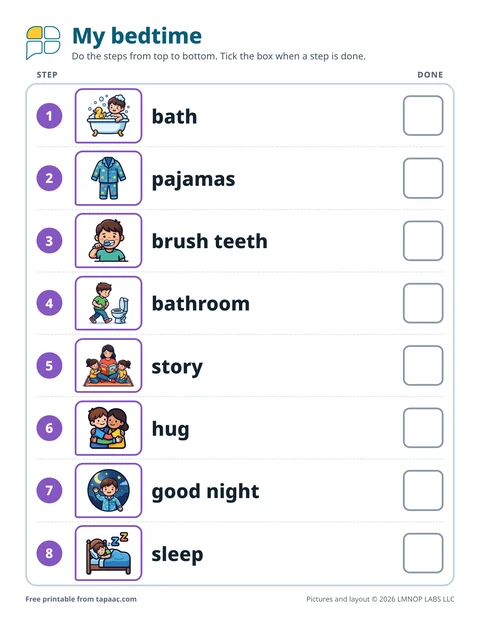 Bedtime routine chartBath, pajamas, teeth, story and sleep, as a checklist or as picture cards.
-
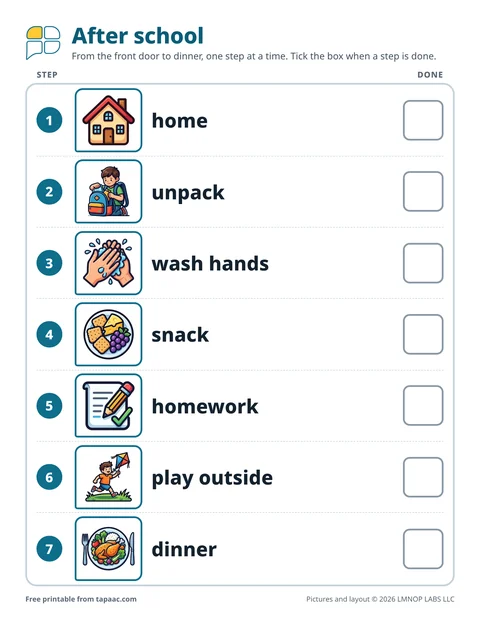 After school routine chartSeven steps from the front door to dinner, 18 picture cards, and a board for telling about the school day.
-
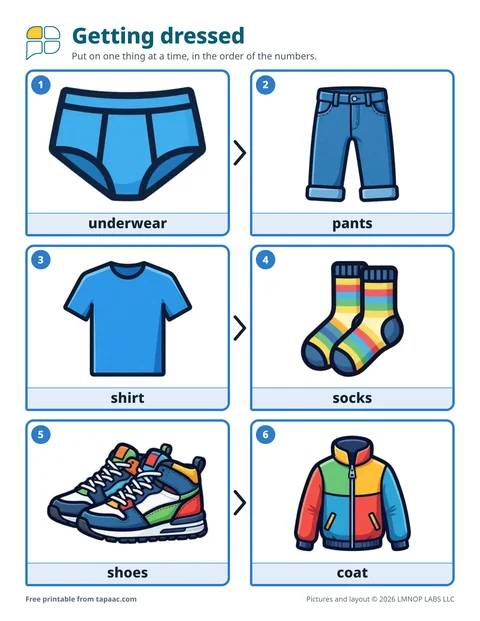 Getting dressed visual scheduleUnderwear to coat, one step at a time, plus clothes cards for any weather.
-
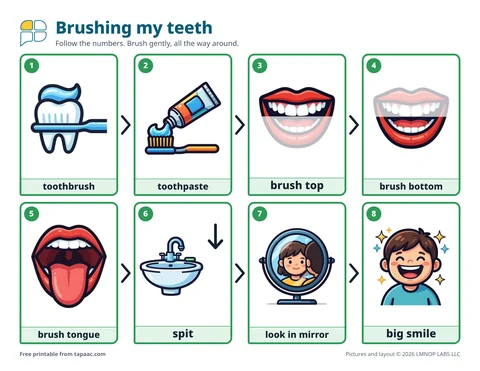 Tooth brushing visual scheduleEight brushing steps, top teeth to big smile, and a weekly morning and night chart.
Need a different board? Make your own with the free AAC board maker.
Making a schedule? Use the free visual schedule maker: routines ready to open and change.
These boards and guides are general information, not therapy or medical advice, and they don’t replace a speech therapist. A speech therapist who knows the person can help choose the right words, pictures and layout. The boards are free to print and share; please don’t sell them (terms of use). Questions about the boards? Email support@lmnoplabs.fun.