 Tap AAC
Core word “play”: from a tug on the hand to an invitation
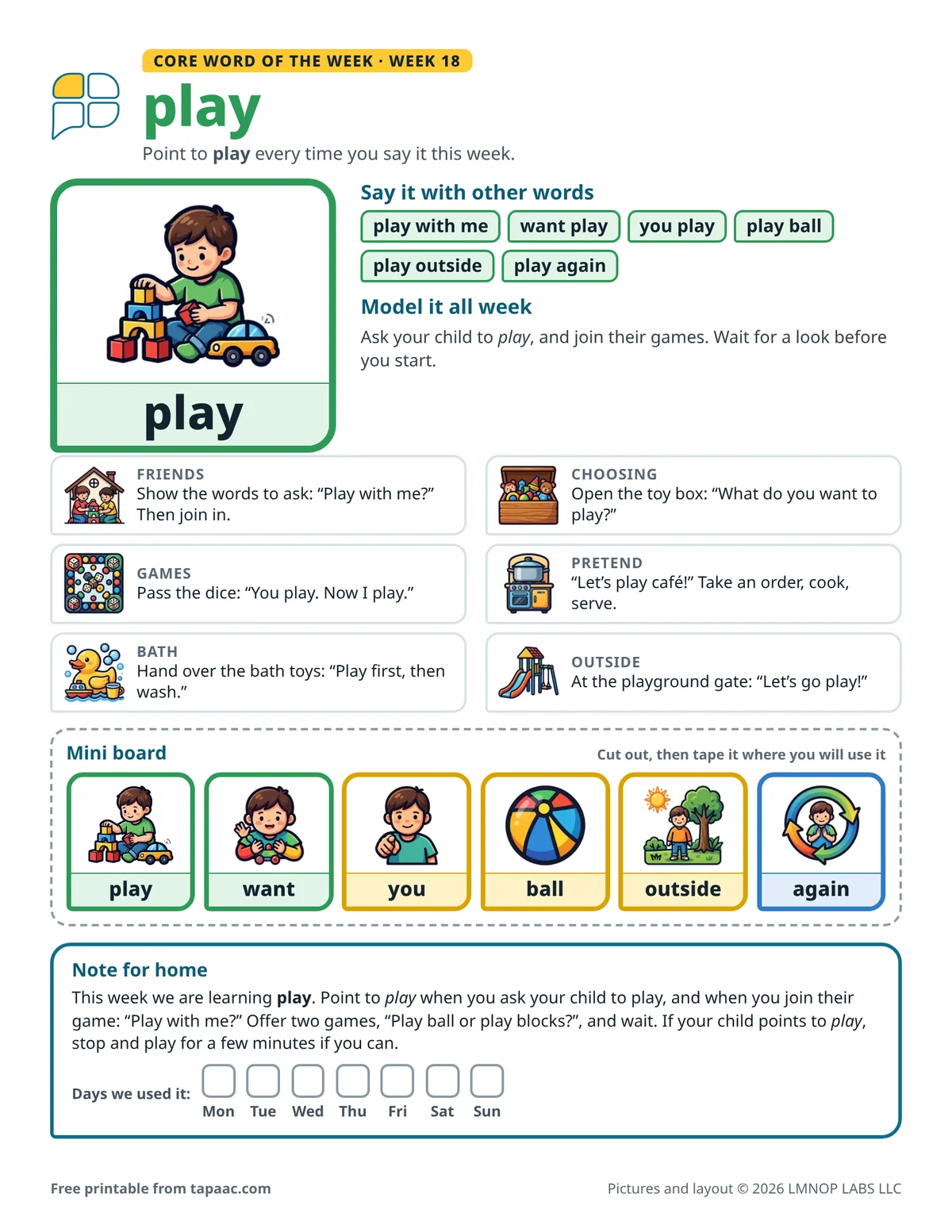
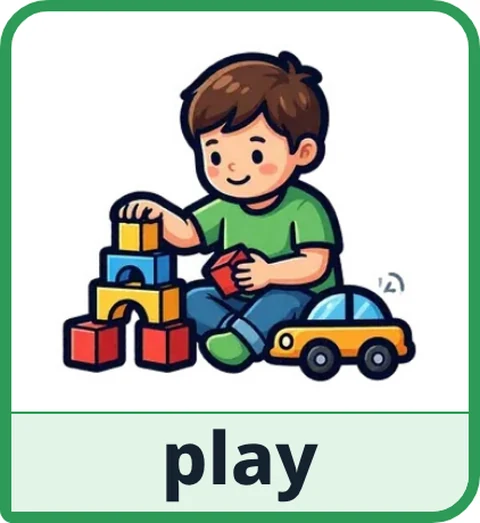
Play asks someone to join in, or says what the person wants to do: play with me, play ball, play outside. It is a word for having fun with other people, and it works with any toy, game or place. This week, point to play when you start a game, and when you ask to join one of theirs.
Download the free printable (PDF) US Letter, 1 page, 477 KB
Printing on A4 paper? Download the A4 PDF (1 page, 477 KB).
Have Tap AAC? Add to Tap AAC (.obz file, 230 KB) · How to add a board
- Week 18 of 32
- Free
- One page
Why play comes with a big reward
After two weeks of questions, play brings a big reward: a parent, a brother or a friend who comes and plays. It turns pulling someone by the hand, or wandering off bored, into a clear invitation.
It joins with words from earlier weeks: want play, you play, play again, play outside. And it fits every age, from a toddler’s blocks to a teenager’s video game or a card game with Grandpa.
Cars or blocks, pretend shops and pirates: asking to play
Toys and games
- Sit near the person with a toy you know they enjoy and ask, “Play? Play with me?” Wait for a look or a reach before you start.
- Offer two games, with the word in each: “Play cars, or play blocks?”
- Board and card games: point to play at every turn. “You play. Now I play.”
Pretend play
- Set up a pretend café or shop with real cups and empty boxes: “Let’s play café! What would you like?”
- Open the dress-up box: “Play pirates? I’m the captain!”
In the bath
- Hold the bath toys back for a moment, then hand them over: “Play first, then we wash hair.”
Outside
- At the playground gate: “Let’s go play!”
- Roll or kick a ball across the yard and call out: “Play ball?”
With other people
- Show the person how to ask another child, “Play with me?”, then stay close and help them join in.
- Play with a pet: “The dog wants to play! Throw the ball.”
At school and with older children
- At free time, hold up two picture cards: “Play trains or play puzzles?”
- With older children and teens, use the games they really love: “Play a video game? Play cards with Grandpa?”
Saturday morning. Priya, who is 7, stands in the doorway while her big brother builds a train track on his bedroom floor. Her dad points to play on her board: “Play? You want to play too?” Priya watches the trains. Her brother looks up, and Dad waits. Priya reaches over and taps play. Her brother holds out an engine: “Okay, you can play. You drive this one.” By lunch, she has tapped play and again to start a second track.
Play with me, play ball, play again
A second word names the game or the partner, which helps other children answer.
- play with me
- want play
- you play
- play ball
- play outside
- play again
If it’s time for something else, or other children don’t answer
If they want to play when it’s time for something else
Answer the word, then say when: “You want to play. We play after dinner.” Set a timer the person can see, and point to play again when it rings.
If other children don’t answer
Be the bridge. Say the invitation out loud to the other child, “Priya wants to play!”, and show them how they can answer too, on the board or out loud.
Note for home: when they say play, play for a few minutes
This week we are learning play. Point to play when you ask your child to play, and when you join their game: “Play with me?” Offer two games, “Play ball or play blocks?”, and wait. If your child points to play, stop and play for a few minutes if you can.
The same note is printed at the bottom of the week’s page, with a box to tick for each day. For families who are new to modeling, send the one-page AAC modeling at home handout with it, and keep using the word cards from earlier weeks.
More core word of the week plans
-
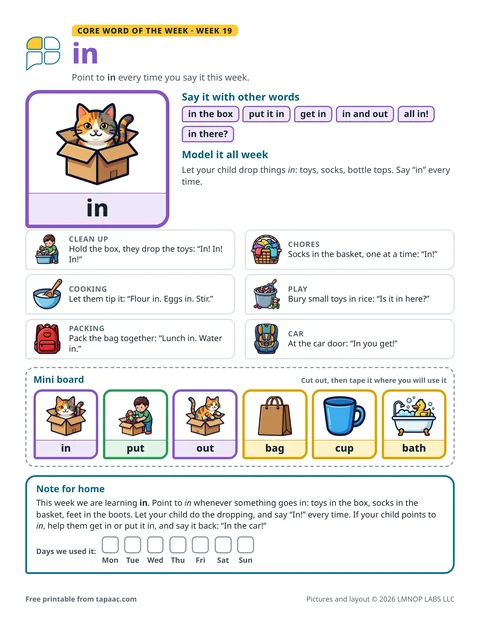 Week 19: inToys in the box, eggs in the bowl: in!
-
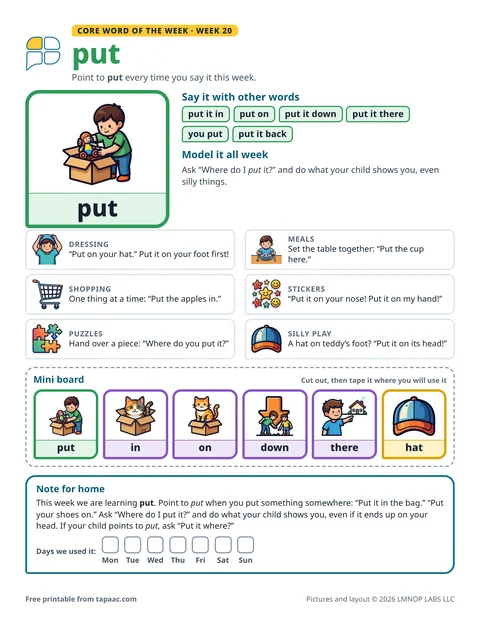 Week 20: putPut it on, put it in, put it down. You’re the boss!
-
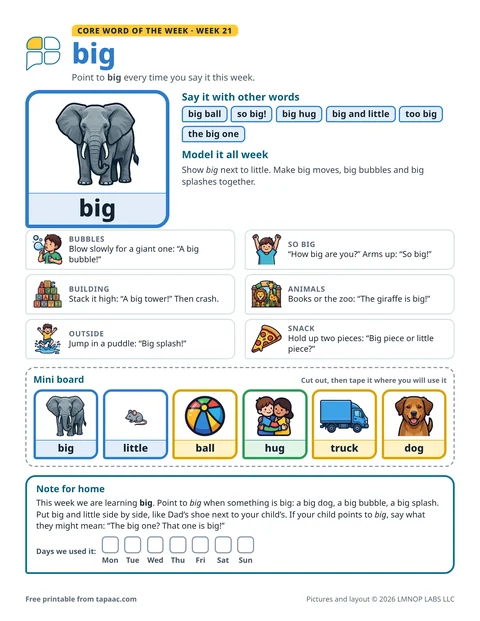 Week 21: bigBig bubbles, big towers, big hugs: so big!
-
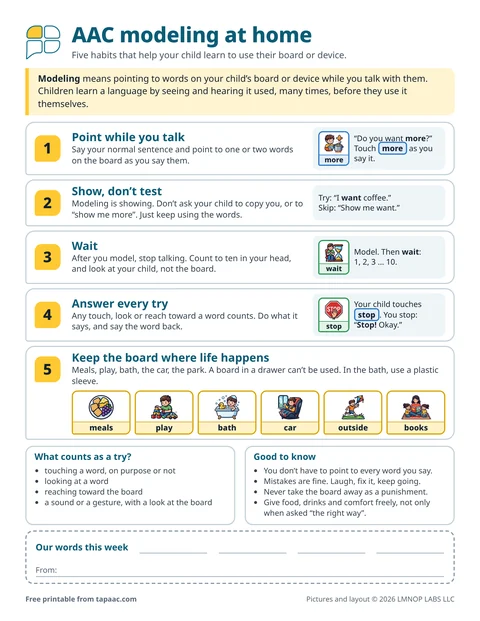 AAC modeling at homeFive habits on one page, to send home or stick on the fridge.
All core word printables and guides
Need a different board? Make your own with the free AAC board maker.
These cards, handouts and plans are general information, not therapy or medical advice, and they don’t replace a speech therapist. A speech therapist who knows the person can help choose the right words and the right way to practice. Everything here is free to print and share; please don’t sell it (terms of use). Questions? Email support@lmnoplabs.fun.