 Tap AAC
Core word “like”: sharing opinions, not just requests
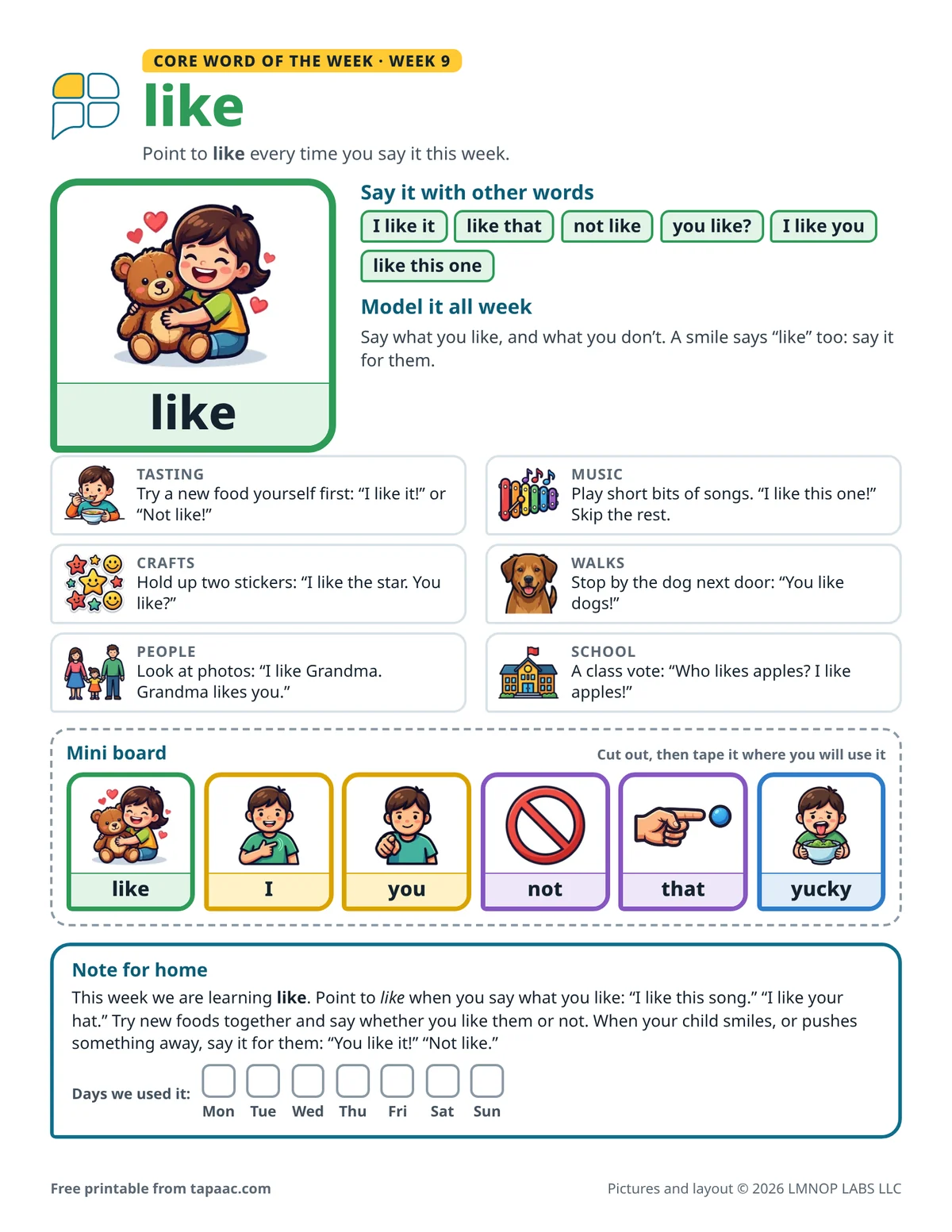
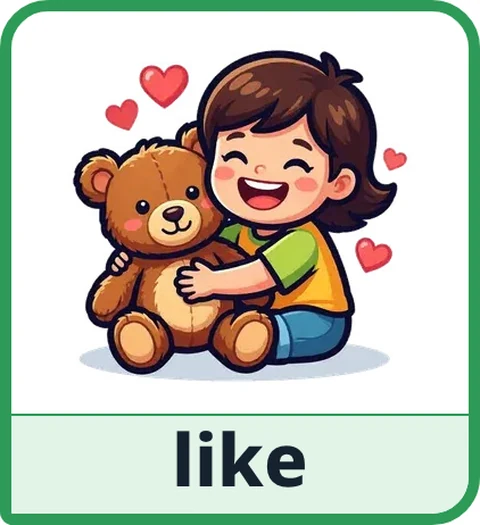
Like says what a person enjoys: I like it, like that, not like. It lets them share an opinion, not only ask for things, and people use it every day at every age. This week, point to like whenever you say what you like or don’t like, and say it for the person when their face tells you.
Download the free printable (PDF) US Letter, 1 page, 420 KB
Printing on A4 paper? Download the A4 PDF (1 page, 419 KB).
Have Tap AAC? Add to Tap AAC (.obz file, 191 KB) · How to add a board
- Week 9 of 32
- Free
- One page
How like is different from want
Like is different from want. Want asks for something now; like tells you about the person: what they enjoy, what they would choose again, what they would rather skip. That is the start of sharing opinions, and of real chat.
It comes straight after week 8’s not, so not like is ready to use. It joins with I and you too: I like it, you like? And it fits any age: a teenager’s music, a grandparent’s garden, a favorite show.
Taste tests, playlists and compliments: saying what you like
At snack and meals
- Taste test: put two new foods on a plate. Try one yourself first and say what you think, with a face to match: “I like it!” or “Not like!”
- After a few bites, ask “Like it?” and wait. A smile, a lean in or a push away all answer it, so say the answer for them: “You like it!”
With music and shows
- Play a few seconds of different songs. For each one, model “I like this one” or “Not like. Skip!”, and let the person skip the ones they don’t like.
- Choosing a show together: “I like the one with the trains.”
In play and crafts
- Stickers or stamps: hold up two and say which one you like: “I like the star.” Then let them choose one for you.
- When they pick up a favorite toy, say what you see: “You like the dinosaur!”
Out and about
- On walks, stop at the things the person enjoys, like the dog next door or the big digger: “You like dogs!”
- At the store, hold up two kinds of fruit: “I like this one. You like?”
With people
- Talk about people with photos: “I like Grandma. Grandma likes you.”
- Give compliments: “I like your shoes!” “I like your drawing.”
At school or therapy
- Class votes: “Who likes apples?” Model “I like apples,” then count the hands.
- At the end of the day, show photos of two activities and ask “What did you like?” Give your own answer first: “I like the swings.”
In the car after school, Omar, who is 14, and his aunt take turns choosing songs. She plays one, wrinkles her nose and points to not and like on his board: “Not like this one. Skip!” Omar grins. The next song is one of his favorites. His aunt says nothing and waits. Omar looks at the board, then touches like. “You like it! Me too.” She turns it up, and two songs later Omar taps not and like before she can ask.
I like it, not like, you like?
Opinions go both ways: say what you like, ask what they like, and use not like as freely as like.
- I like it
- like that
- not like
- you like?
- I like you
- like this one
If everything is liked, or you can’t tell what they like
If they say like about everything
That’s fine: they have found a word that gets a reaction. Answer it, and model the other side too: “You like it! I don’t like it. Not like.” Hearing both helps the word mean something.
If you can’t tell whether they like something
Watch their face and body: a smile, leaning in, pushing away. Say what you see, and check: “You’re smiling. You like it?” You don’t have to be sure to model the word.
Note for home: try new foods together and say what you think
This week we are learning like. Point to like when you say what you like: “I like this song.” “I like your hat.” Try new foods together and say whether you like them or not. When your child smiles, or pushes something away, say it for them: “You like it!” “Not like.”
The same note is printed at the bottom of the week’s page, with a box to tick for each day. For families who are new to modeling, send the one-page AAC modeling at home handout with it, and keep using the word cards from earlier weeks.
More core word of the week plans
-
 Week 10: openJars, presents, doors and books: open it!
-
 Week 11: ITalk about yourself: I want, I like, I see.
-
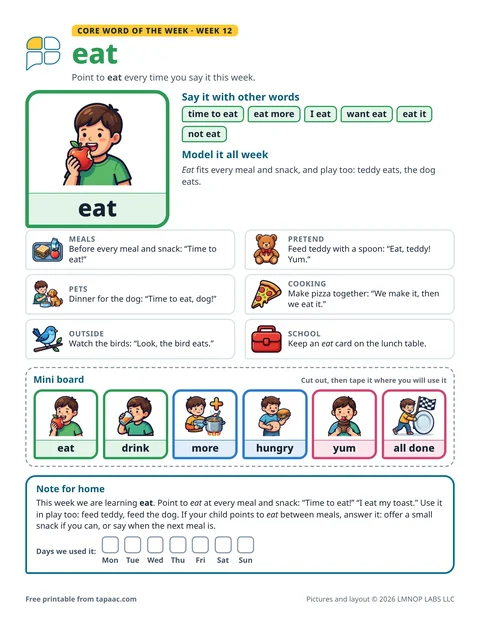 Week 12: eatMeals, snacks, pretend play and pets: time to eat.
-
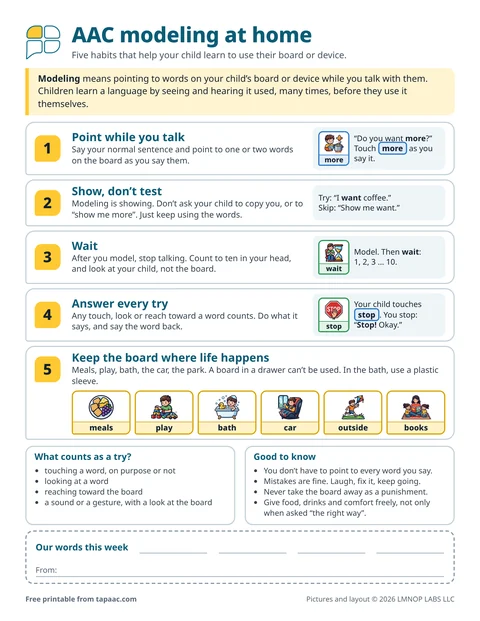 AAC modeling at homeFive habits on one page, to send home or stick on the fridge.
All core word printables and guides
Need a different board? Make your own with the free AAC board maker.
These cards, handouts and plans are general information, not therapy or medical advice, and they don’t replace a speech therapist. A speech therapist who knows the person can help choose the right words and the right way to practice. Everything here is free to print and share; please don’t sell it (terms of use). Questions? Email support@lmnoplabs.fun.