 Tap AAC
Core word “eat”: asking for food that isn’t in sight
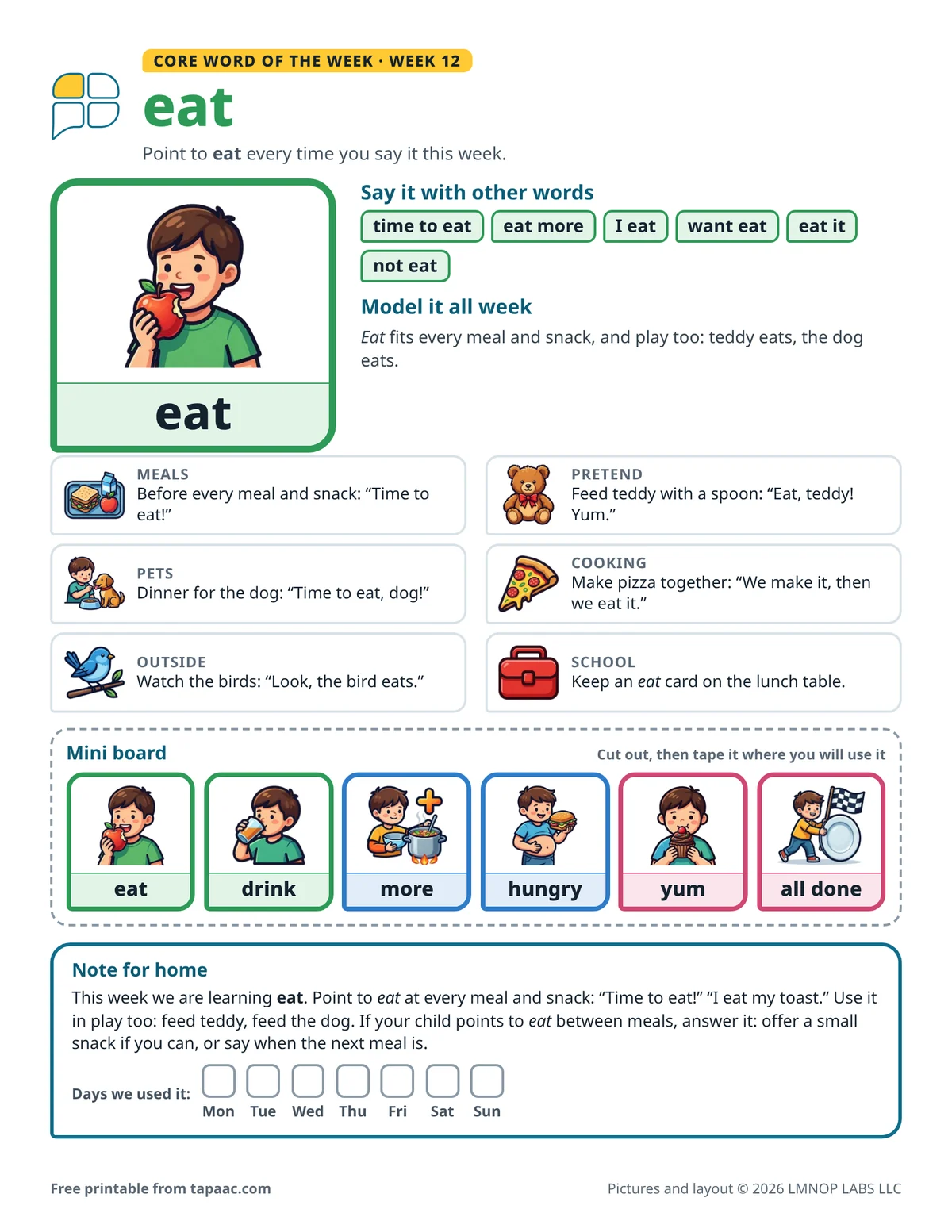
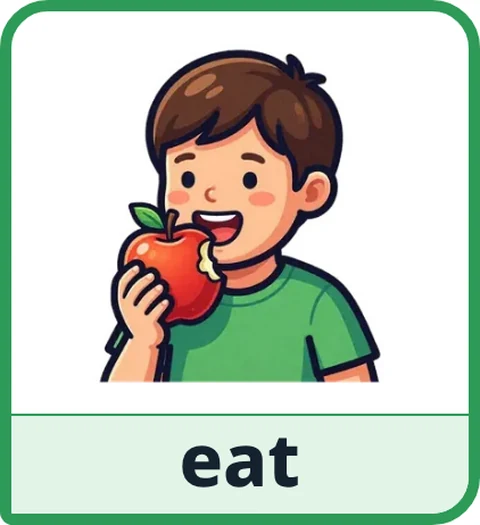
Eat is the word for food time: time to eat, I eat, eat more. It lets a person say they are hungry or want food, without having to find the name of the food. This week, point to eat at every meal and snack, and use it in play, in books and with pets.
Download the free printable (PDF) US Letter, 1 page, 426 KB
Printing on A4 paper? Download the A4 PDF (1 page, 426 KB).
Have Tap AAC? Add to Tap AAC (.obz file, 216 KB) · How to add a board
- Week 12 of 32
- Free
- One page
Why eat matters between meals, too
Meals and snacks come round several times a day, so eat gets plenty of practice. With it, the person can ask for food when none is in sight, which is hard to do by pointing, and say they are hungry before hunger turns into a bad moment.
Eat isn’t only about the person’s own plate. Teddies eat, dogs eat, the dinosaur in the book eats, which makes it a word for play and stories too. It joins with earlier words: I eat, eat more, want eat, not eat.
Time to eat: meals, cooking, teddy’s dinner and the dog’s bowl
At meals and snack
- Before every meal and snack, point to eat: “Time to eat!”
- Talk about your own food as you eat it: “I eat my toast. Mmm.”
- Offer a choice with the word in it: “Eat apple, or eat banana?”
- Between meals, if the person seems hungry: “Hungry? Eat?” Then get a small snack.
Cooking and shopping
- Make something simple together, like pizza or pancakes: “We make it, then we eat it.”
- Unpacking the shopping: “Eat this now? No, eat it later.”
Pretend play
- Feed a teddy or a doll with a toy spoon: “Eat, teddy! Yum.” Then hand the spoon to the person.
- Make a hungry puppet: cut a mouth in a box and feed it balls or pictures of food. “Eat! Munch, munch.”
Pets and animals
- Feeding a pet: “Time to eat, dog!” “The dog eats.”
- At the park or on a farm, watch the animals: “Look, the birds eat.”
Books and school
- In picture books, point to eat every time a character eats something.
- At school, keep an eat card on the lunch table, and use it at snack time too.
At the play table, Ben, who is 6, is feeding his toy dinosaur. His speech therapist holds a spoon of pretend soup and points to eat on his board: “Dinosaur eat? Mmm.” She feeds the dinosaur and makes a loud crunching sound. Ben laughs. Next time she holds the spoon still, near the dinosaur’s mouth, and waits. Ben touches eat. “Eat! The dinosaur eats.” Crunch, crunch. By the end of the session, Ben is pointing to eat for the teddy, the doll and his therapist.
Time to eat, eat more, not eat
Pair eat with more, want or not from earlier weeks, so the person can ask, choose or refuse.
- time to eat
- eat more
- I eat
- want eat
- eat it
- not eat
If they say eat all day, or mealtimes are hard
If they say eat all day
Answer it each time. Offer a small snack if you can, or say when food is coming: “You want to eat. Lunch is after the park.” Eat may also mean the kitchen or a favorite food, so check with a choice.
If mealtimes are hard
Start with play: feed teddy, the hungry puppet, the animals in a book. The word can be fun before it is about the person’s own plate. For mealtime advice, ask the person’s speech therapist or doctor.
Note for home: answer eat between meals too
This week we are learning eat. Point to eat at every meal and snack: “Time to eat!” “I eat my toast.” Use it in play too: feed teddy, feed the dog. If your child points to eat between meals, answer it: offer a small snack if you can, or say when the next meal is.
The same note is printed at the bottom of the week’s page, with a box to tick for each day. For families who are new to modeling, send the one-page AAC modeling at home handout with it, and keep using the word cards from earlier weeks.
More core word of the week plans
-
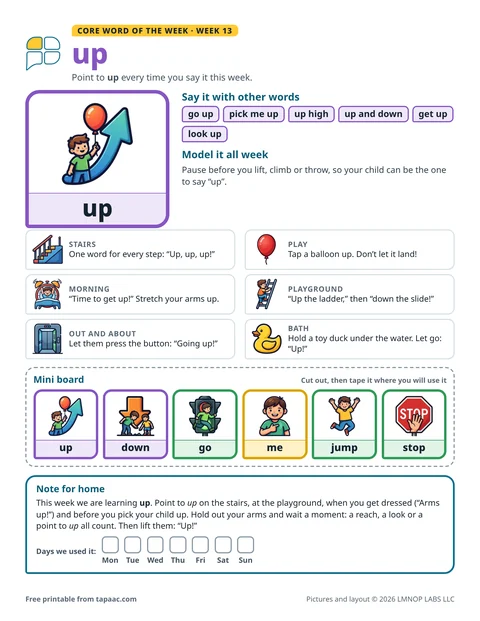 Week 13: upLifts, stairs, balloons and climbs: up, up, up!
-
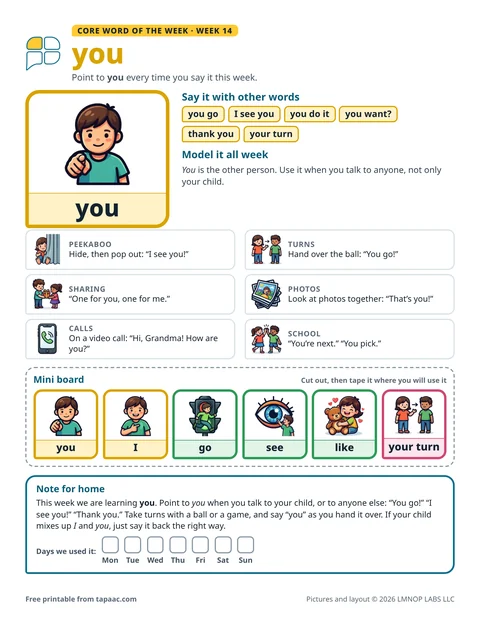 Week 14: youTurns, peekaboo and sharing: you go, I see you.
-
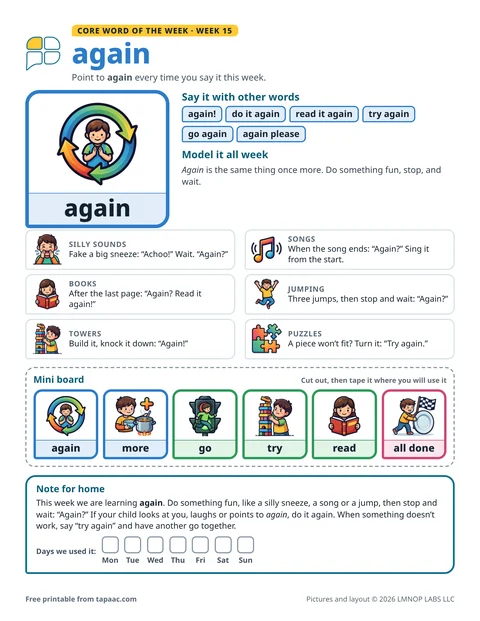 Week 15: againKeep the fun going: again! And try again.
-
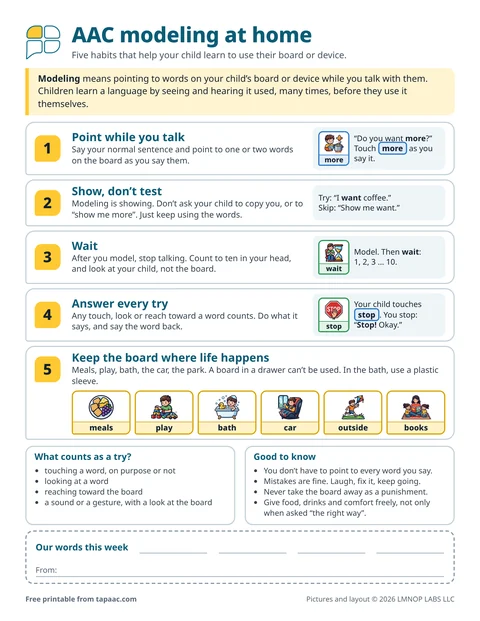 AAC modeling at homeFive habits on one page, to send home or stick on the fridge.
All core word printables and guides
Need a different board? Make your own with the free AAC board maker.
These cards, handouts and plans are general information, not therapy or medical advice, and they don’t replace a speech therapist. A speech therapist who knows the person can help choose the right words and the right way to practice. Everything here is free to print and share; please don’t sell it (terms of use). Questions? Email support@lmnoplabs.fun.