 Tap AAC
Pick one routine that is hard right now. Break it into three to eight steps you can see, find one picture for each, and line them up in order, top to bottom or left to right. Put the schedule where the routine happens, walk through it together, and mark each step done as you go. Start small, and add steps once it’s working.
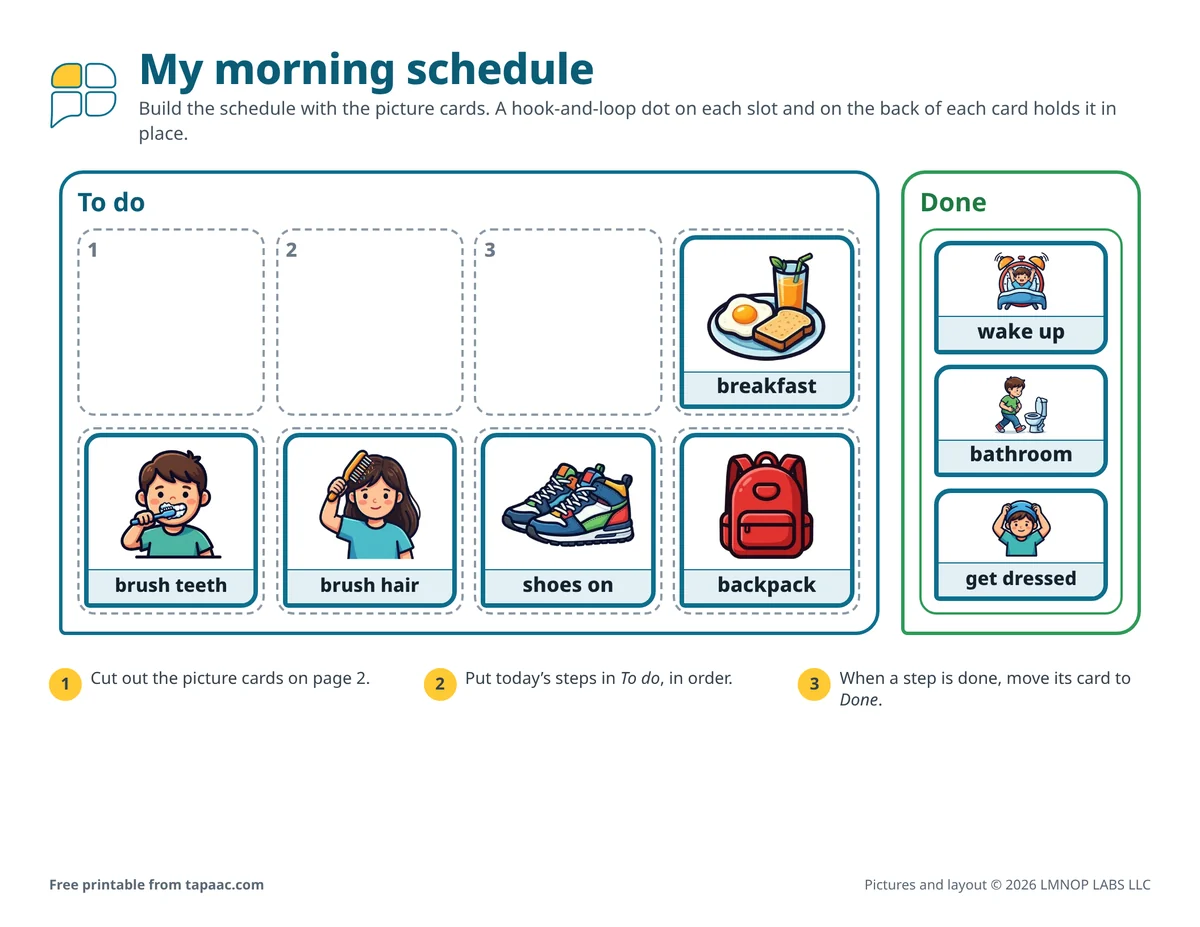
What a visual schedule is
A visual schedule shows the parts of a routine or a day as pictures, in order. Spoken words are gone as soon as they’re said; a picture stays put, so the person can look back at it as often as they need. A schedule can be as short as two steps (a first-then board) or as long as a whole school day.
What you need
- A picture for each step: printed pictures, drawings, or photos of the real things.
- Something to put them on, in order: card, a clipboard, the fridge door or a whiteboard.
- A way to show a step is done: a tick, turning the card over, or moving it to a Done pocket.
- If you want cards that move: lamination and hook-and-loop dots.
7 steps to make a visual schedule
- Choose one routine. Pick the part of the day that’s hardest right now: the morning rush, bedtime, the bathroom. One routine at a time.
- Do the routine and write down every step. Then cross out the steps the person already does without help. What’s left is your schedule.
- Keep it short. Three to eight steps. If one step is really several steps, like getting dressed, give it a schedule of its own.
- Pick one picture per step. Use the same picture for the same thing every time. Some people understand a photo of the real toothbrush or the real bus more easily.
- Put the steps in order. Top to bottom or left to right, the same way every time. Number them if the person knows numbers.
- Put it where the routine happens. At the person’s eye level: the bathroom wall, the bedroom door, the fridge.
- Teach it by doing it. Walk through the routine together, point to each picture as you go, and mark each step done. Then point to the schedule instead of repeating instructions.
Ways to show that a step is done
| Way | Good for |
|---|---|
| Tick a box with a dry-erase marker | Laminated checklists, like the bedtime routine chart |
| Move the card to a Done pocket | People who like to move things; our To do and Done schedule pages |
| Turn the card over | A strip on the wall where the cards stay in place |
| Cover the step with a sticky note | A quick paper schedule you drew yourself |
If it isn’t working
| What happens | Try this |
|---|---|
| The schedule gets ignored | Move it closer to where the routine happens, and point to it before you speak. |
| Too many steps, too slow | Take steps away, or use a first-then board for the hardest part. |
| One step always stalls | Give that step its own schedule, like the getting dressed schedule. |
| The schedule turned into a fight | End the routine with something the person enjoys, and put it on the schedule as the last card. |
Make your own, or start from ours
Our free schedules come with picture cards and a blank To do and Done page, so you can start with ours and change it. For a schedule with different steps, the free visual schedule maker opens these routines ready to change: pick pictures or add photos, tick steps off, and print it.
Work with the person’s team
A teacher, an occupational therapist or a speech therapist who knows the person can help choose the steps and the pictures. Use the same pictures at home and at school, so a step looks the same everywhere.
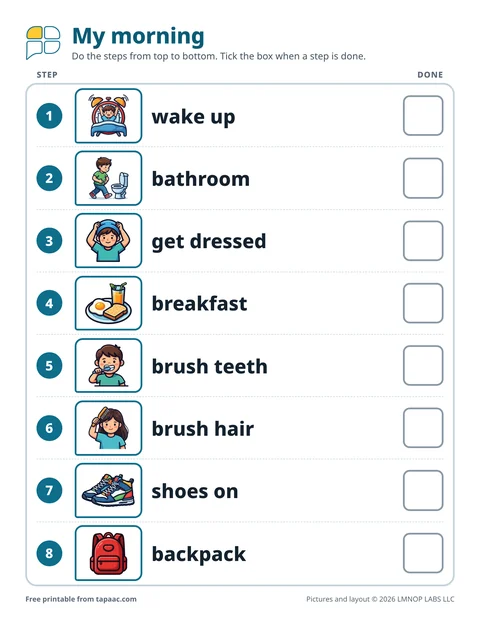 Morning routine chart
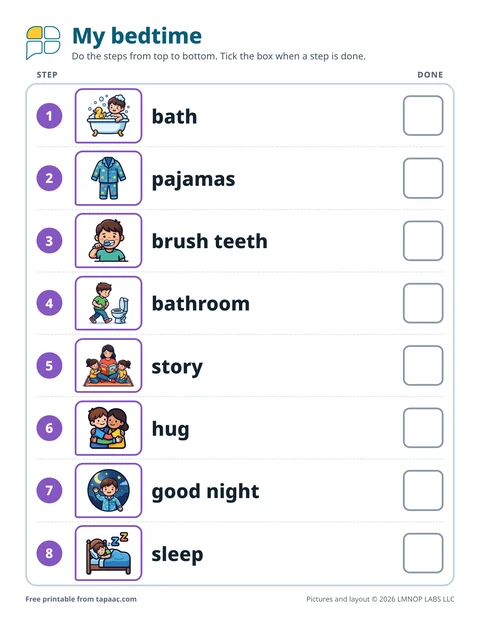 Bedtime routine chart
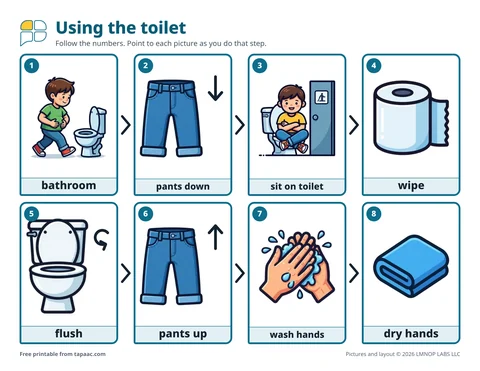 Potty visual schedule
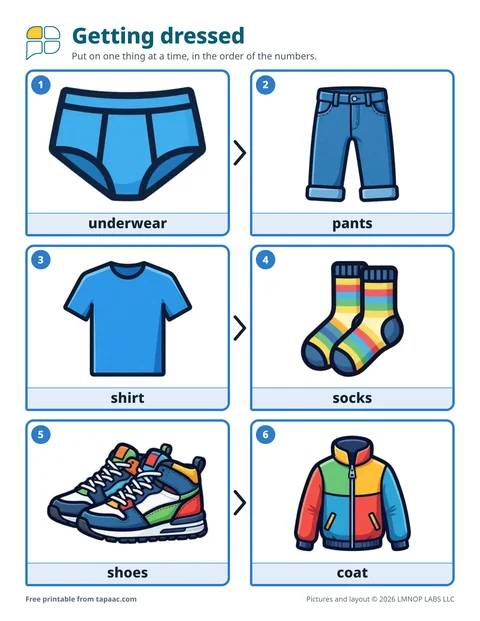 Getting dressed visual schedule