 Tap AAC
Tooth brushing visual schedule: free printable steps
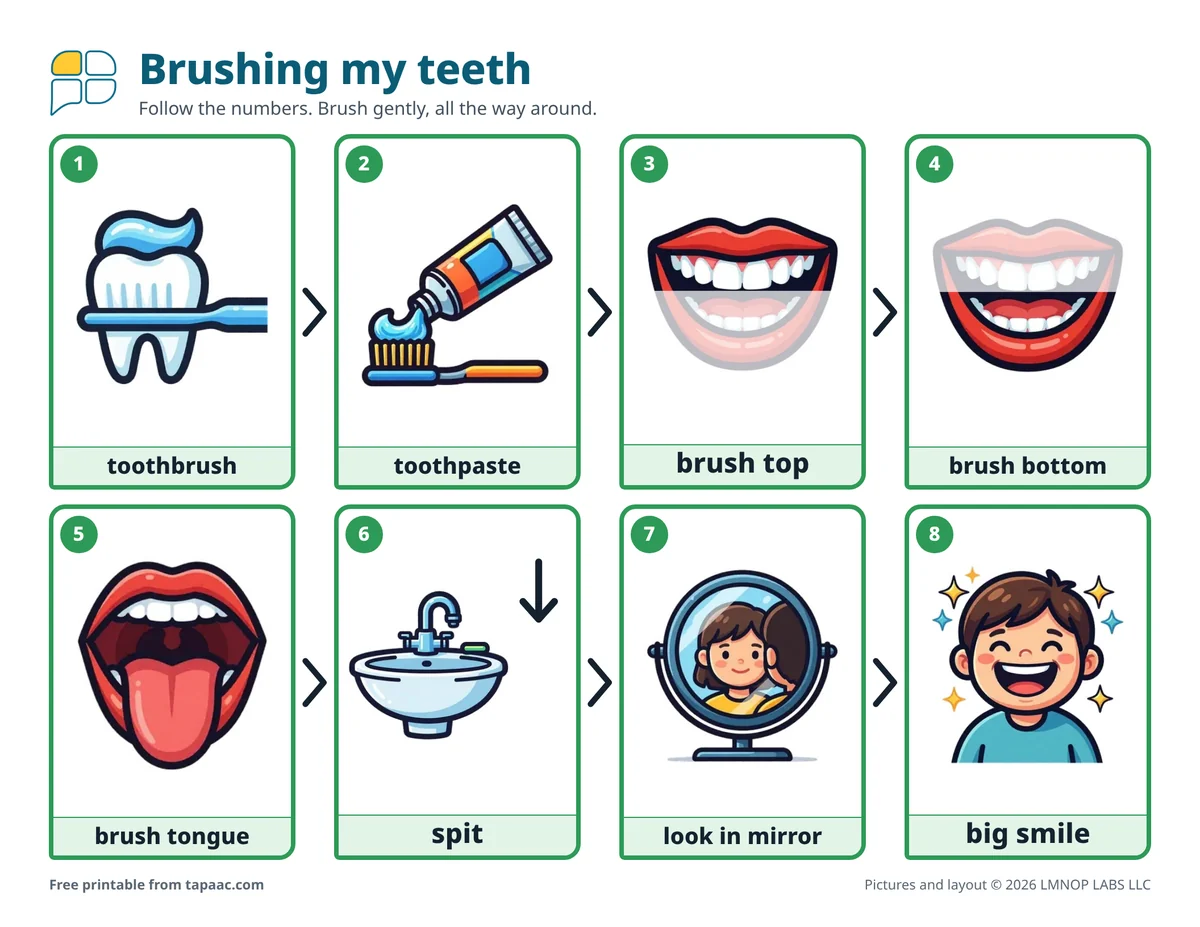
A tooth brushing visual schedule breaks brushing into small picture steps, so a child can see what comes next: toothbrush, toothpaste, brush the top teeth, brush the bottom teeth, brush the tongue, spit, look in the mirror, big smile. This free PDF has the eight steps to hang by the sink and a weekly chart to tick off brushing in the morning and at night.
Download the free PDF US Letter, 2 pages, 423 KB
Printing on A4 paper? Download the A4 PDF (2 pages, 424 KB). Or pick one page shape for every page:
Portrait (tall page, 2 pages): US Letter PDF (423 KB) · A4 PDF (424 KB)
Landscape (wide page, 2 pages): US Letter PDF (424 KB) · A4 PDF (423 KB)
Edit this board in the free board maker: change the words and pictures, then print.
Have Tap AAC? Add to Tap AAC (.obz file, 384 KB) · How to add a board
- Free
- No sign-up
- Print as many as you need
Who it’s for
Children who are learning to brush on their own, children who stop after the front teeth, and anyone who does better with the steps in front of them than with reminders from the doorway. It’s just as useful for an older child or an adult who needs a little support with self-care.
How to use it
- Hang it by the sink, at eye level, where it can be seen with a toothbrush in hand.
- Brush your own teeth alongside. Point to each picture as you get to it: “Top teeth.” Showing is easier to follow than telling.
- Give each part of the mouth its turn. Stay on brush top until the top teeth are done all the way around, then move your finger to brush bottom.
- Use a song or a timer for the brushing steps. The American Dental Association advises brushing twice a day, for two minutes each time.
- Finish with the mirror and the smile. A clear last step tells the child brushing is over.
Top, bottom, tongue
The brush top and brush bottom pictures show the same mouth with one half faded, so the teeth to brush stand out. Going round in the same order every night (top, bottom, tongue) helps the order stick. Ask the child’s dentist how much toothpaste to use at their age, and whether to rinse after brushing; advice on rinsing differs, so this sheet leaves it out.
The weekly chart
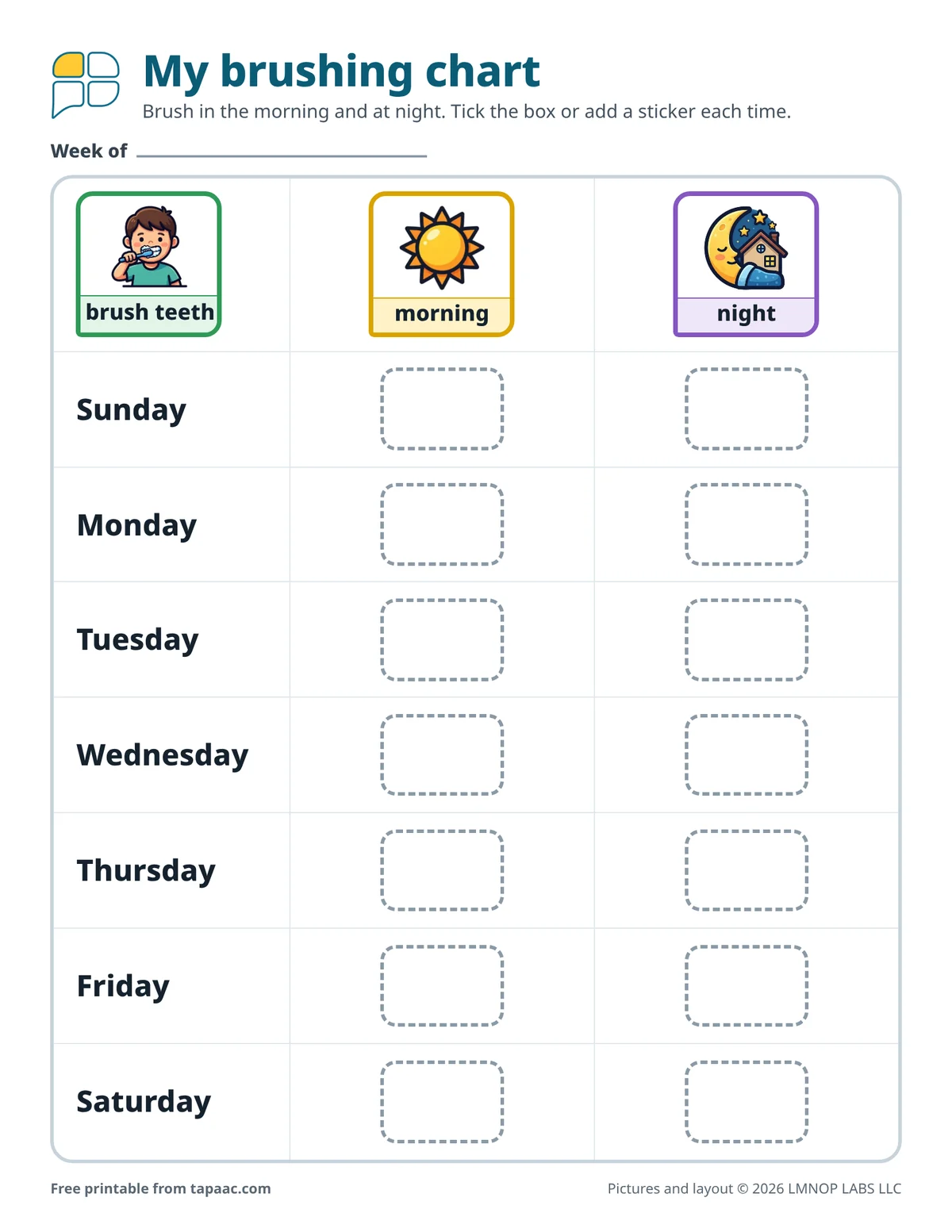
Page 2 has a row for each day, with a box for the morning and a box for the night. Tick the box, color it in or add a sticker straight after brushing. The chart is about the routine, not perfect brushing: if the brush went in and the steps were followed, tick it.
Lily brushes her front teeth and puts the brush down. Her dad taps picture 4: “Bottom teeth.” Lily looks at the picture, where only the bottom teeth are bright, and brushes along the bottom. Spit. Then she leans into the mirror, shows her teeth with a big smile, and ticks tonight’s box.
Steps on the schedule
- toothbrush
- toothpaste
- brush top
- brush bottom
- brush tongue
- spit
- look in mirror
- big smile
Making it work
- Laminate both pages. A dry-erase marker on the chart wipes off at the end of the week.
- Brushing is a step on the morning routine chart and the bedtime routine chart; this schedule breaks that one step down.
- Take a copy on trips, so brushing looks the same in a new bathroom.
- If brushing is hard to bear (the taste, the feel of the bristles), the child’s dentist or an occupational therapist can suggest ways to start.
More free boards
-
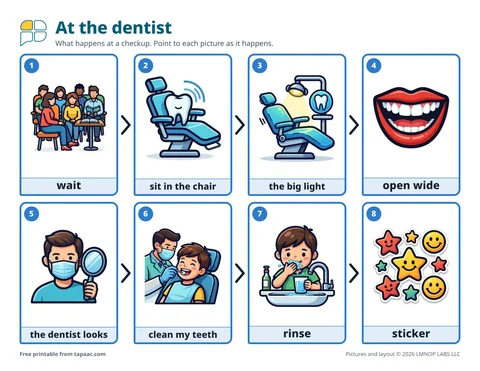 Dentist visit visual scheduleWhat happens at a dental checkup, a stop signal, and words for talking to the dentist.
-
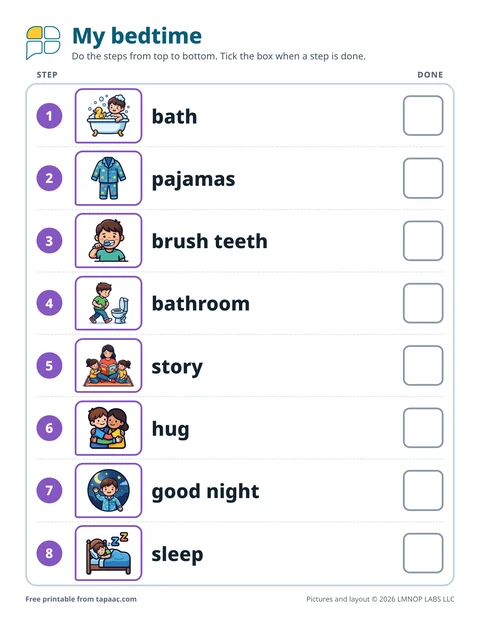 Bedtime routine chartBath, pajamas, teeth, story and sleep, as a checklist or as picture cards.
-
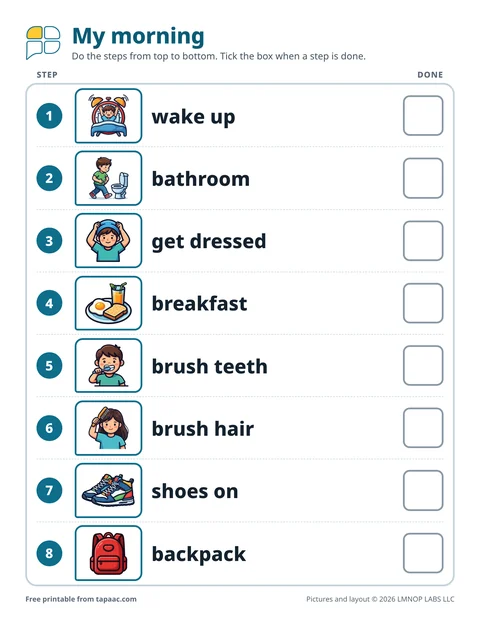 Morning routine chartEight steps from wake up to backpack, with picture cards and a make-your-own schedule.
-
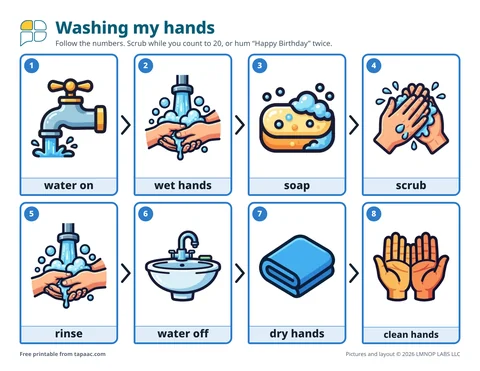 Hand washing visual sequenceEight steps from water on to clean hands, when to wash, and small strips for the sink.
Need a different board? Make your own with the free AAC board maker.
Making a schedule? Use the free visual schedule maker: routines ready to open and change.
These boards and guides are general information, not therapy or medical advice, and they don’t replace a speech therapist. A speech therapist who knows the person can help choose the right words, pictures and layout. The boards are free to print and share; please don’t sell them (terms of use). Questions about the boards? Email support@lmnoplabs.fun.