 Tap AAC
Pick a break spot and decide what happens there. Teach the card when the child is calm: show it, hand it over, go to the spot, come back. Then keep the card within reach and, at first, say yes every single time it’s used. Keep breaks short, show what comes next before the break ends, and only start asking for “one more minute” once the card is a habit.
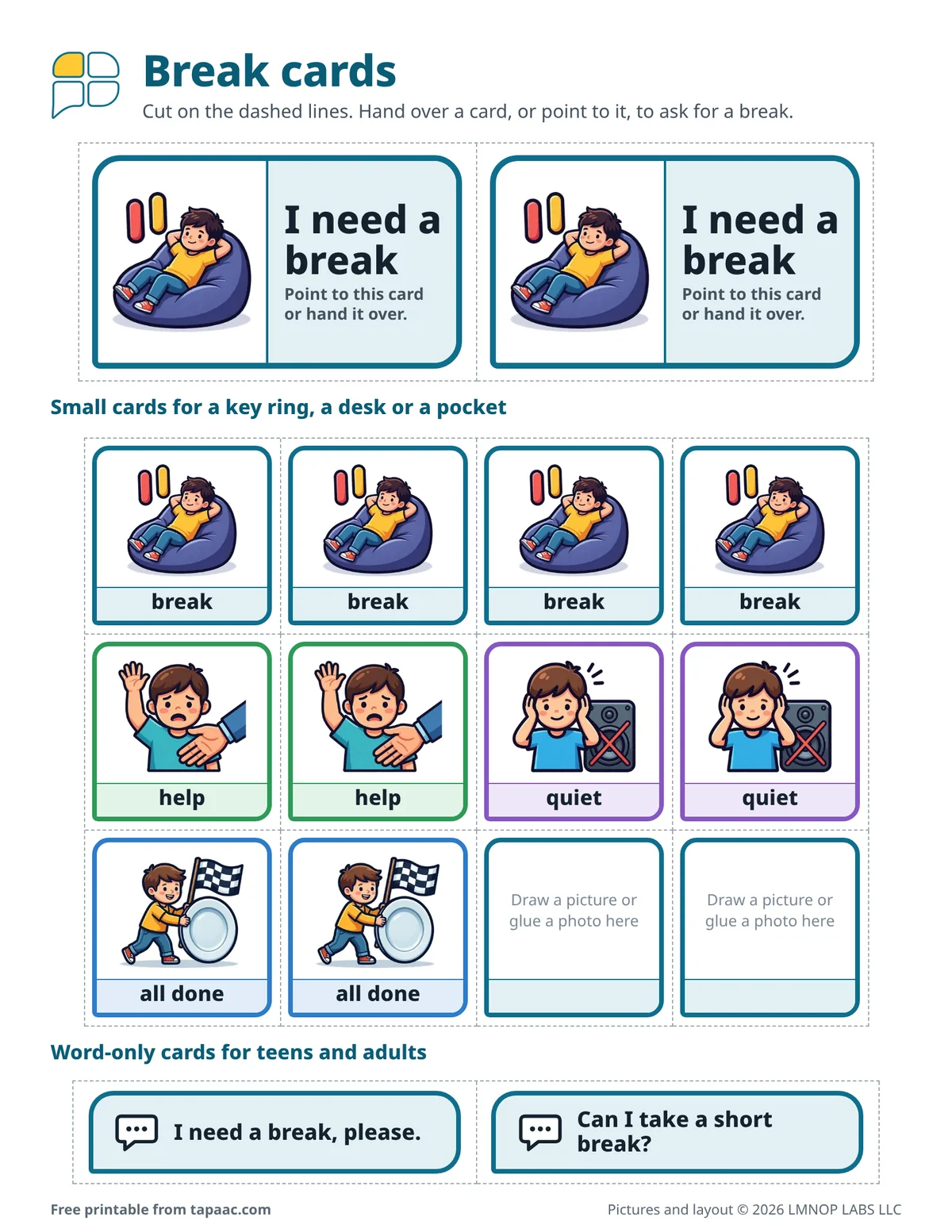
What a break card is for
A break card gives a child a way to say “this is too much, I need to stop for a bit” without words and before things boil over. Leaving the room, throwing the pencil or shutting down are all ways of asking for a break too. The card is a clearer way of asking, and it only stays useful while asking with it works.
Before you start
- A break spot. A quiet corner, a beanbag, a chair by the window, a hallway bench. Somewhere you can still see the child.
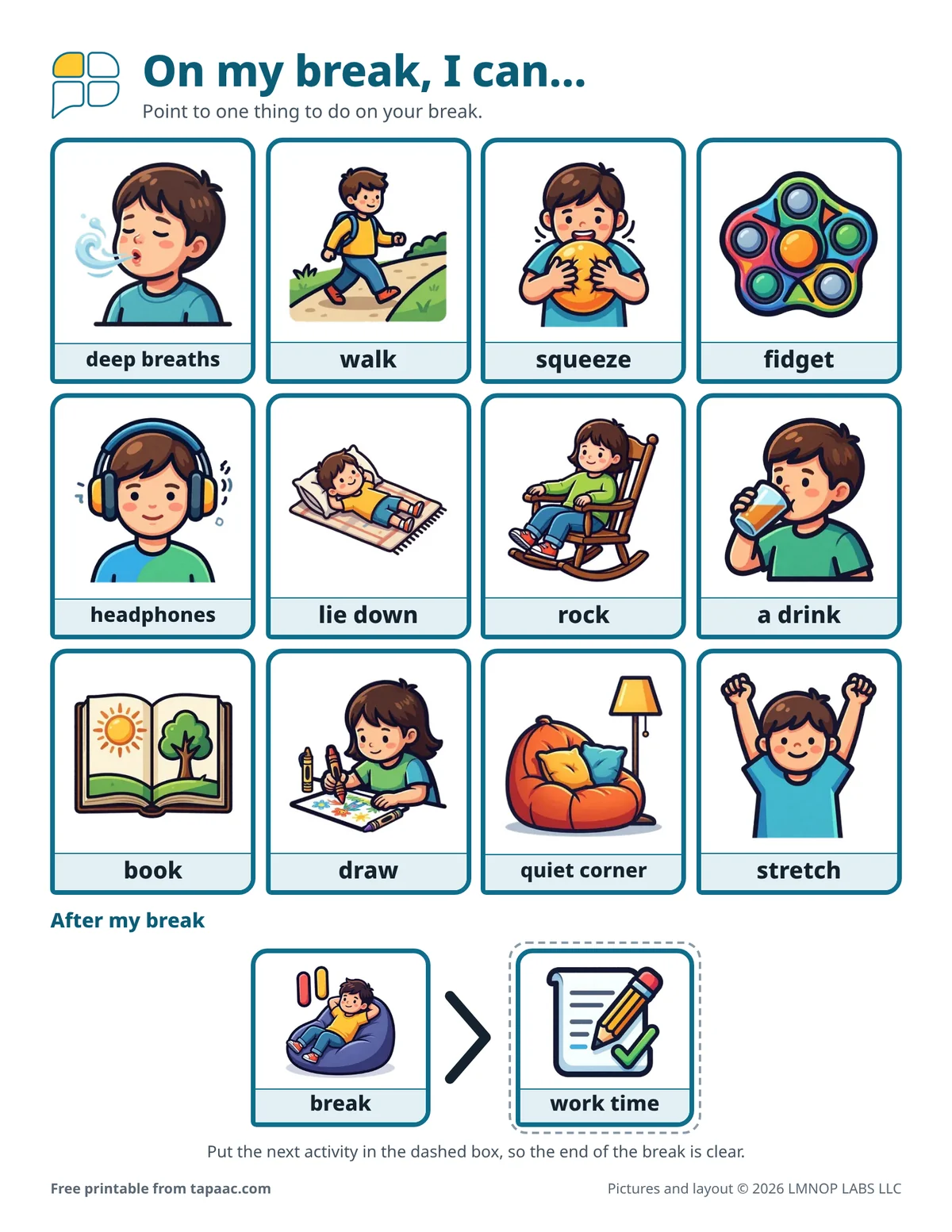
- What happens on a break. Pick a few calm things from the break choices board: headphones, a drink, a squeeze toy, a book. Not the tablet or a favorite game, or the break becomes the goal.
- How long. A few minutes is usually enough. A sand timer or a countdown makes the end visible.
- The card in reach. Taped to the desk corner, on a key ring, in a pocket. The child shouldn’t have to go and find it.
6 steps to teach a break card
- Practice when everyone is calm. “When you need a break, give me this.” Do it together a few times: hand over the card, go to the spot, sit, come back.
- Show it yourself. Use a card too: “I need a break,” and take a short one. Seeing an adult ask for a break makes it normal.
- Prompt early. At the first signs (fidgeting, pushing work away, putting hands over ears) point to the card: “Break?” Don’t wait for the meltdown.
- Say yes every time at first. Even when the timing is inconvenient. The child is learning that the card works.
- Keep the break short and calm. Little talk, no lecture. One of the break choices, then the timer.
- Make coming back easy. Before the timer ends, show the next card: “After the break, two more problems, then lunch.” A first-then board helps here.
Once it’s a habit
When the child uses the card reliably, you can start to shape it. Ask for one small thing before the break (“Finish this one, then break”), or set how many breaks are in a lesson by putting that many cards on the desk. Change one thing at a time, and go back a step on hard days.
If it isn’t working
| What happens | Try this |
|---|---|
| The card comes out every time work starts | The work may be too hard or too long. Teach the help card too, and make the first task shorter. |
| The child never uses it | Prompt earlier, put the card closer, and practice again when calm. |
| The child won’t come back | Make the break spot less exciting, use a timer, and show what’s next before the break ends. |
| Breaks keep getting longer | Use the countdown on our wait cards, and stay close at the end of the break. |
| The child gets upset when told “not now” | Go back to saying yes every time for a while. The card has to be trusted first. |
Work with the team
Use the same card and the same break routine at home and at school, so it means the same thing everywhere. A teacher, a speech-language pathologist, an occupational therapist or a behavior specialist who knows the child can help choose the break spot, the break choices and when to start shaping it. To say how they feel as well, add the feelings board.
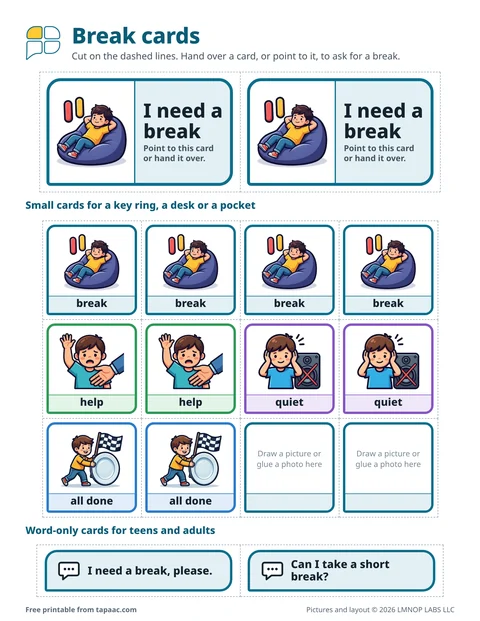 Break cards
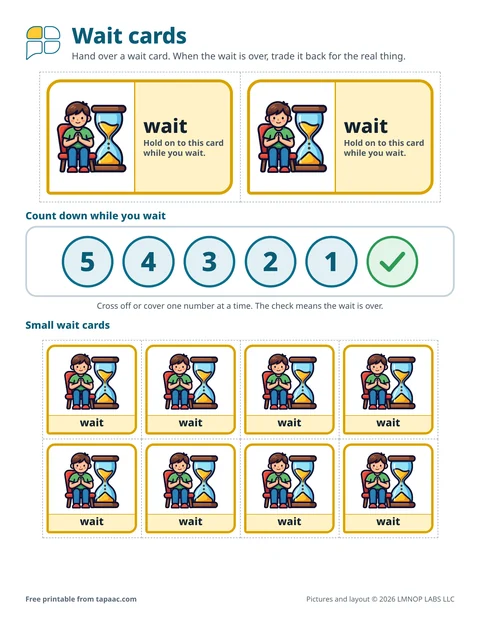 Wait cards
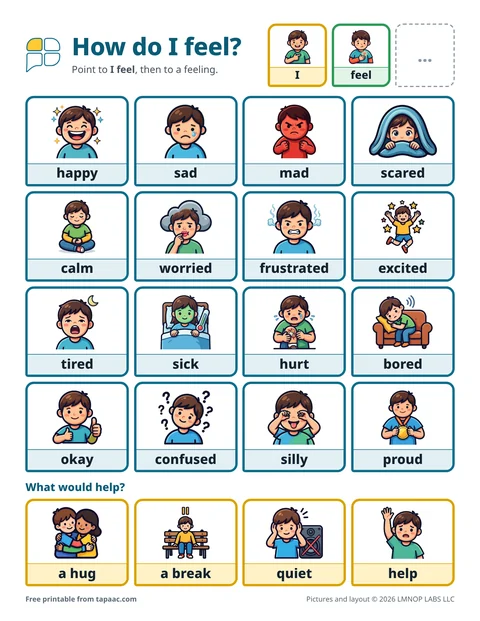 Feelings board
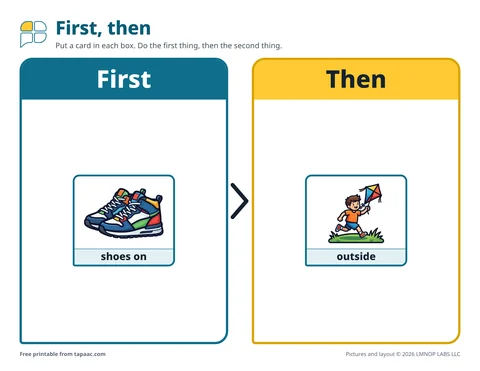 First-then board